Why Your Website Breaks When You Grow (And How to Fix It Before It Happens)
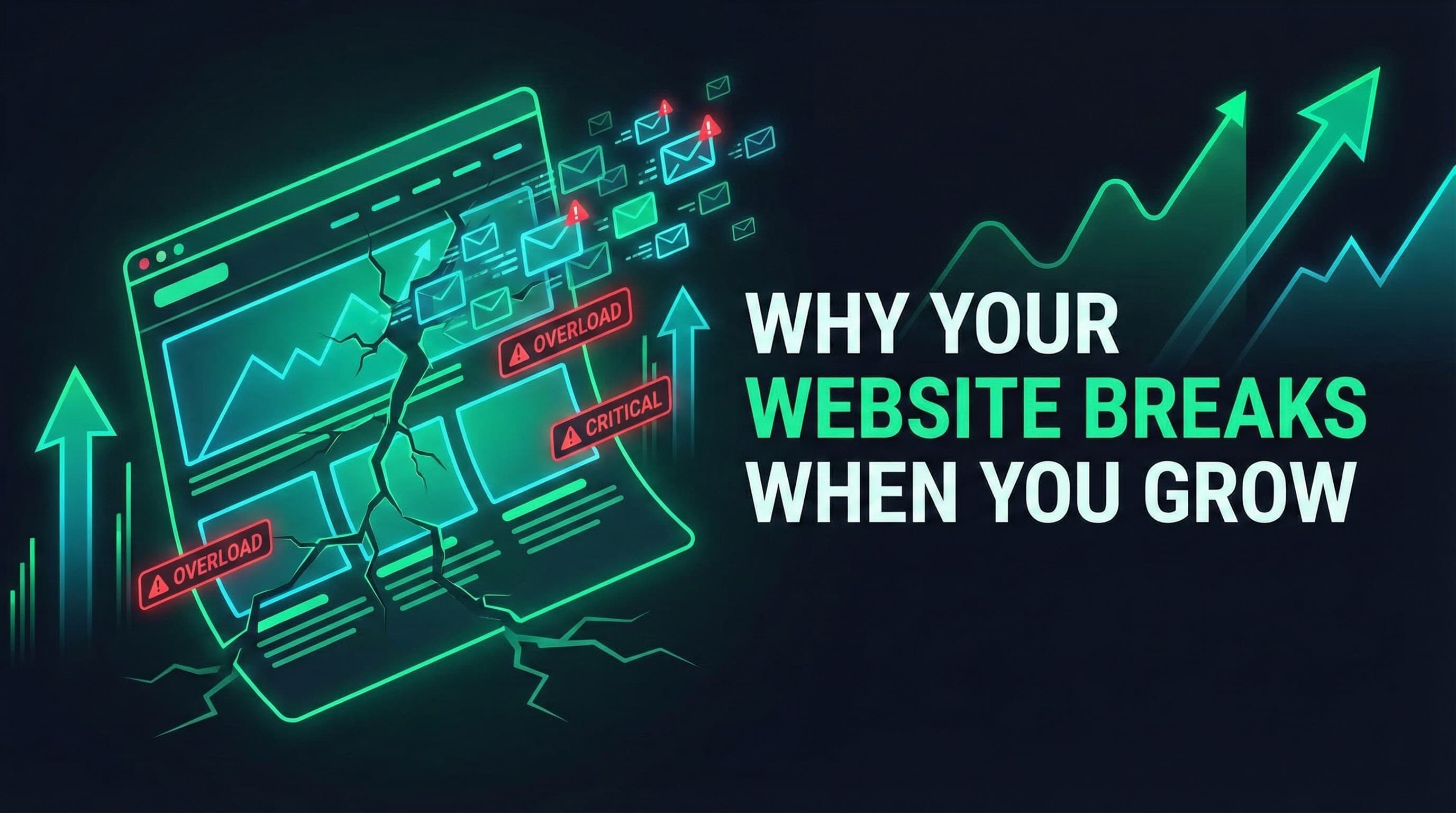
Why Your Website Breaks When You Grow (And How to Fix It Before It Happens)
At First, Everything Works Fine
In the early days, your website feels fast. Pages load smoothly. Orders go through. Customer messages arrive instantly.
With low traffic, almost any website seems "good enough." You launch, test a few ads, and everything appears stable.
That's the dangerous part.
Because most websites only fail when growth starts.
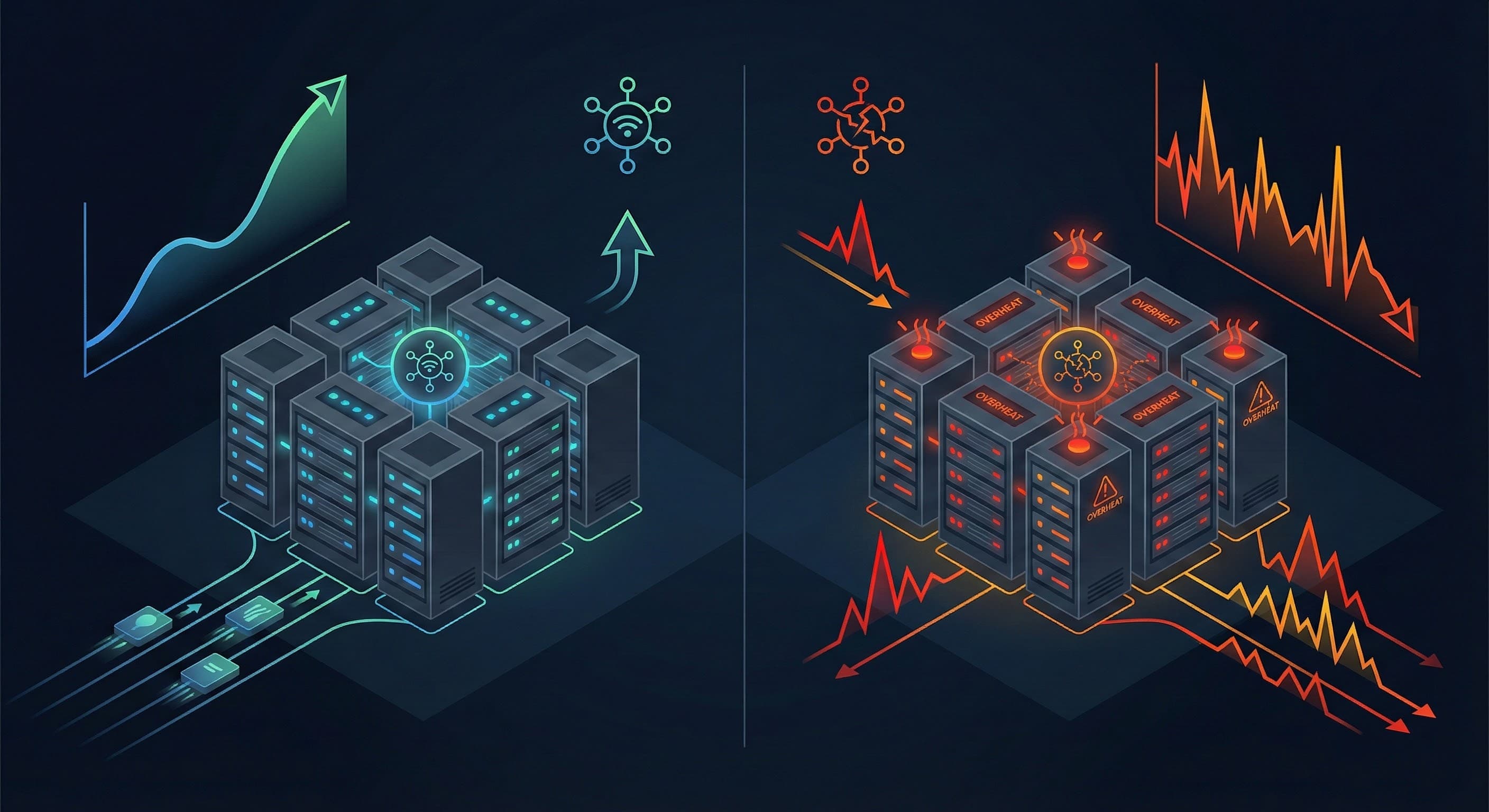
Then You Turn On Ads — And Everything Collapses
It usually happens suddenly.
You launch a marketing campaign. Traffic increases within hours. And then:
-
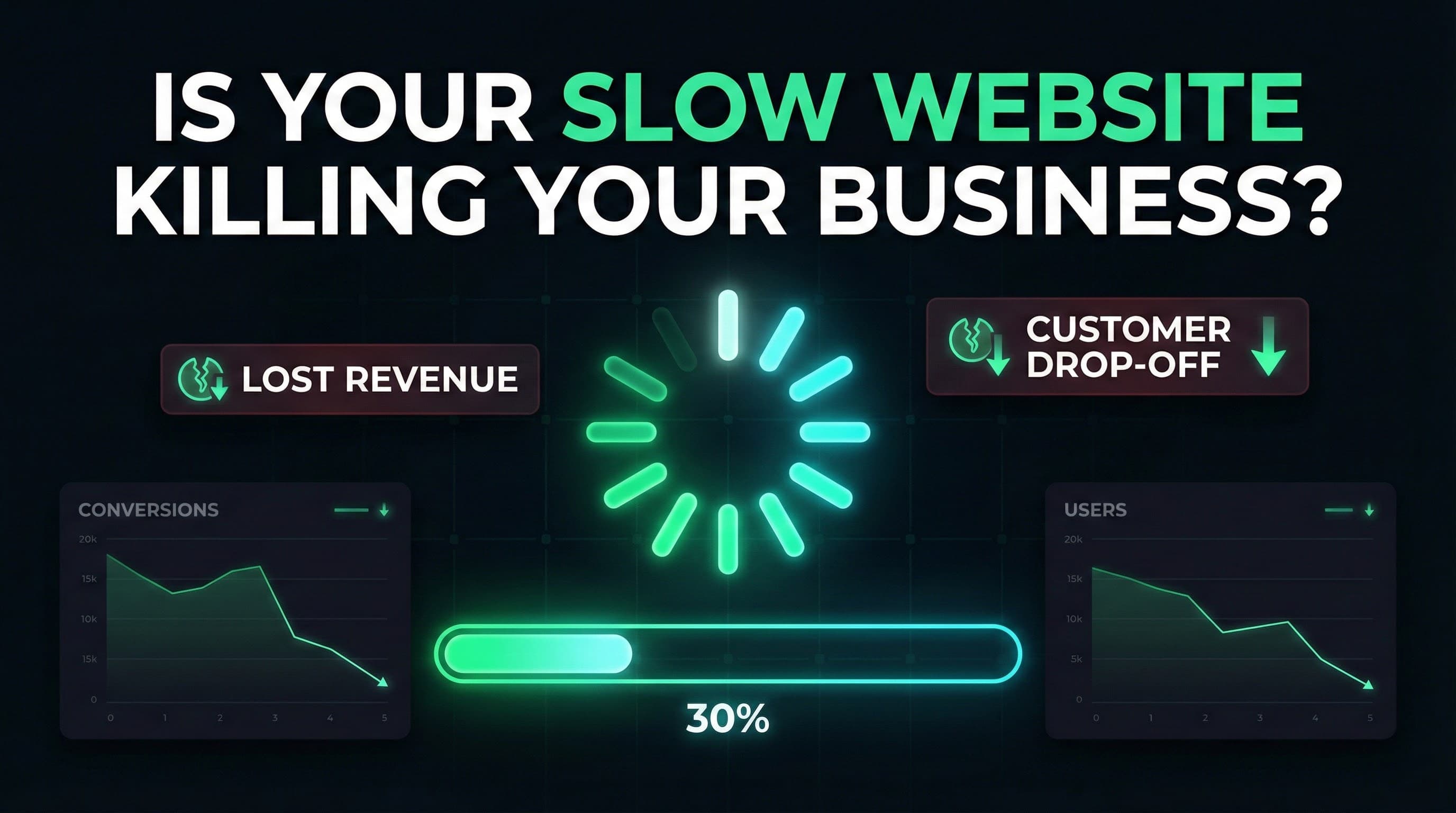
Pages start loading slowly
-
Checkout fails intermittently
-
Chatbots stop responding
-
Forms submit endlessly without confirmation
What looked like a "small performance issue" becomes a full business emergency.
When Your Chatbot, Payments, or APIs Start Failing
Modern websites rely on many invisible systems:
-
Contact forms
-
Chatbots
-
Payment gateways
-
Email notifications
-
Marketing tracking tools
When traffic spikes, these parts get overwhelmed first.
From the customer's perspective, this feels worse than a slow site:
-
Messages are ignored
-
Payments fail
-
Orders disappear
-
Trust vanishes instantly
You don't just lose traffic — you lose credibility.
Peak Hours Become Your Worst Enemy
Your website may survive at night. It may survive in the morning.
But during peak business hours?
That's when:
-
Orders slow down
-
Dashboards freeze
-
Customer support gets flooded with complaints
-
Refund requests pile up
This is when hidden bottlenecks reveal themselves — the kind that only appear under real load.
The Real Business Damage (It's Bigger Than You Think)
When your website breaks under growth, the damage goes far beyond technical issues:
1. Lost Customers
Users rarely come back after one bad experience.
2. Lost Revenue
Every minute of failure means real money disappearing quietly.
3. Damaged Brand Trust
A broken website signals instability, regardless of how good your product is.
4. Wasted Advertising Budget
You pay for traffic that you can't even convert.
Growth should multiply your success — not your losses.
Why This Happens to Good Businesses
Here's the truth:
Most websites are built to start, not to scale.
They are optimized for:
-
Low traffic
-
Small databases
-
Limited automation
-
Basic user behavior
They are not prepared for:
-
Sudden demand
-
Marketing campaigns
-
Seasonal spikes
-
Viral exposure
So when growth arrives, the system simply wasn't designed for it.
How You Fix This Before It Becomes Expensive
Fixing performance after a collapse costs more, takes longer, and damages your reputation.
The smart approach is preparation.
Here's how growing businesses protect themselves:
1. System Audit
You identify hidden weaknesses before customers do.
2. Performance Optimization
You remove delays that silently kill conversions.
3. Growth & Load Scaling
Your website adapts automatically when traffic surges.
4. Ongoing Managed Support
Problems are prevented — not reacted to under pressure.
The goal is simple: growth without disruption.
Growth Should Feel Safe — Not Risky
A healthy website doesn't just look good. It stays reliable when everything is on the line.
You should be able to:
-
Launch ads with confidence
-
Handle traffic spikes calmly
-
Scale revenue without fear
-
Sleep knowing your system won't collapse at midnight
That peace of mind is not luck — it's engineering.
Who This Is For
This matters if you:
-
Run paid advertising
-
Sell online
-
Rely on chatbots or automated systems
-
Operate during peak hours
-
Plan to scale within the next 6–12 months
If growth is part of your future, stability must be part of your present.
How We Help You Grow Without Breaking
Our services are built around one goal: Prepare your system before growth exposes its limits.
✅ Audit — Find hidden risks early
✅ Optimization — Remove performance bottlenecks
✅ Scaling — Make your system growth-ready
✅ Managed Support — Continuous protection as you grow
You focus on selling. We focus on making sure your website survives success.
Final Thought
Most businesses don't fail because of bad products. They fail because their systems can't handle success.
Don't wait for a crash to learn that lesson.
🚀 Prepare your system for growth — before it costs you real money.