DevOps Best Practices for Modern Teams
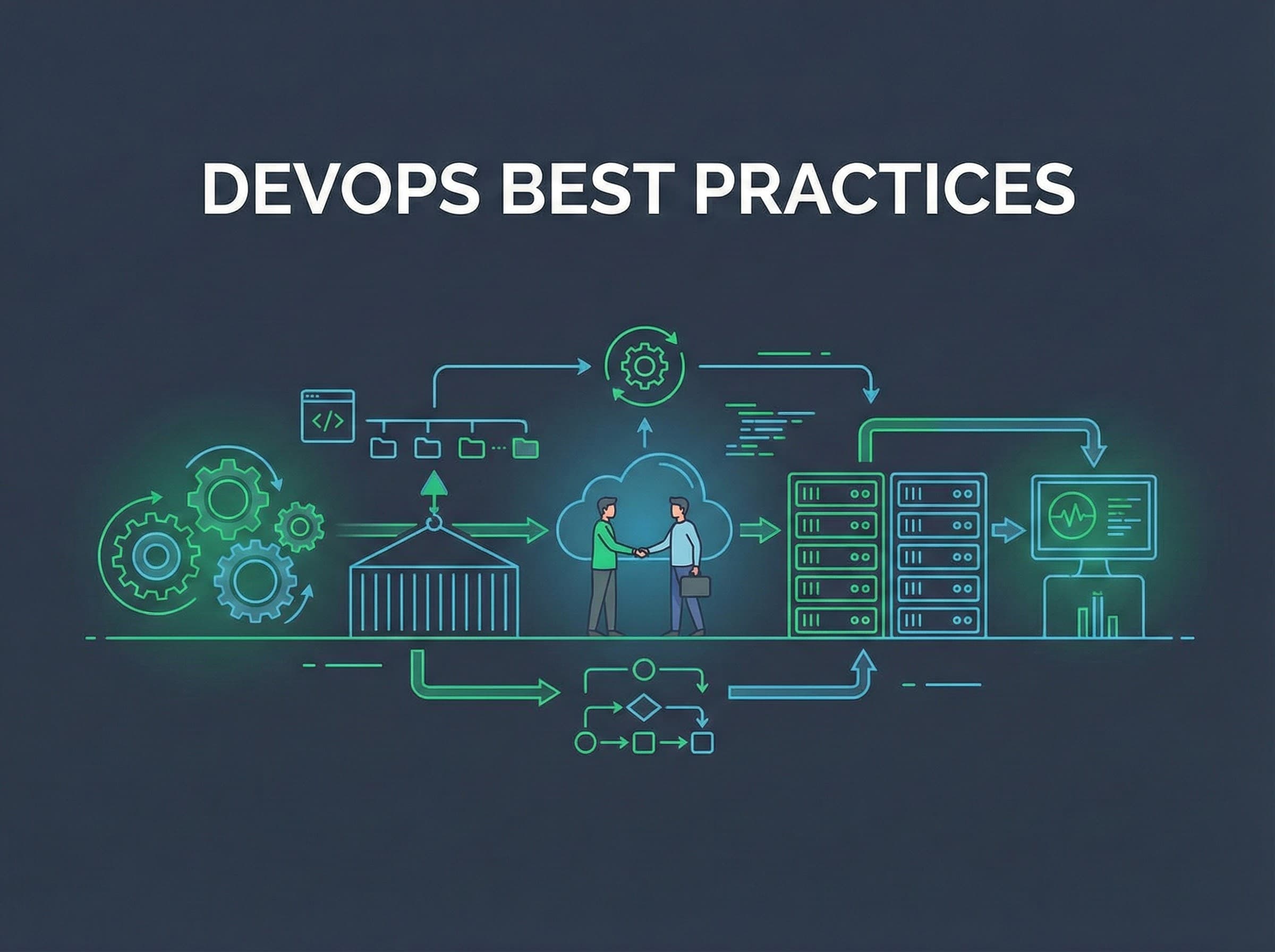
DevOps Best Practices for Modern Teams
DevOps has transformed how teams build, deploy, and maintain software. By breaking down silos between development and operations, organizations can ship faster, reduce errors, and improve collaboration. Here are the essential practices every modern team should adopt.
What is DevOps?
DevOps is a cultural and technical movement that emphasizes:
- Collaboration: Developers and operations work together
- Automation: Automate repetitive tasks
- Continuous improvement: Iterate and improve processes
- Monitoring: Measure and respond to issues quickly
Core DevOps Practices
1. Infrastructure as Code (IaC)
Infrastructure as Code treats infrastructure configuration like application code:
- Version control: Track changes to infrastructure
- Reproducibility: Create identical environments consistently
- Automation: Provision infrastructure automatically
- Tools: Terraform, Ansible, CloudFormation
Benefits:
- Eliminates configuration drift
- Enables rapid disaster recovery
- Makes infrastructure changes reviewable
2. Continuous Integration (CI)
CI involves automatically building and testing code changes:
- Automated builds: Build on every commit
- Automated testing: Run tests automatically
- Fast feedback: Get results quickly
- Fail fast: Catch issues early
Best practices:
- Keep builds fast (under 10 minutes)
- Run tests in parallel
- Use build caching
- Notify teams of failures immediately
3. Continuous Deployment (CD)
CD automates the deployment process:
- Automated deployments: Deploy without manual steps
- Blue-green deployments: Switch between environments
- Canary releases: Roll out to a small percentage first
- Rollback capability: Quickly revert if issues occur
4. Monitoring and Observability
You can't manage what you don't measure:
Three pillars of observability:
- Metrics: Numerical data over time (CPU, memory, request rate)
- Logs: Event records with timestamps
- Traces: Request flows through distributed systems
Key metrics to track:
- Application performance (response time, throughput)
- Error rates
- Resource utilization
- Business metrics
5. Containerization
Containers package applications with their dependencies:
- Consistency: Same environment everywhere
- Isolation: Applications don't interfere with each other
- Portability: Run anywhere containers are supported
- Scalability: Easily scale containers up or down
Docker and Kubernetes:
- Docker: Container runtime
- Kubernetes: Container orchestration
6. Security as Code
Integrate security into your DevOps pipeline:
- Automated security scanning: Scan for vulnerabilities
- Secret management: Use tools like Vault or AWS Secrets Manager
- Least privilege: Grant minimum necessary permissions
- Regular updates: Keep dependencies updated
CI/CD Pipeline Example
A typical CI/CD pipeline includes:
- Source: Code in version control (Git)
- Build: Compile and package application
- Test: Run automated tests
- Security scan: Check for vulnerabilities
- Deploy to staging: Deploy to test environment
- Integration tests: Run end-to-end tests
- Deploy to production: Deploy to live environment
- Monitor: Watch for issues
Common Tools
Version Control
- Git, GitHub, GitLab, Bitbucket
CI/CD
- GitHub Actions, GitLab CI, Jenkins, CircleCI
Infrastructure
- Terraform, Ansible, Pulumi
Containers
- Docker, Kubernetes, Docker Compose
Monitoring
- Prometheus, Grafana, Datadog, New Relic
Logging
- ELK Stack, Splunk, CloudWatch
Best Practices Summary
- Automate everything: Reduce manual work and human error
- Version control everything: Code, infrastructure, configurations
- Test in production-like environments: Catch issues before production
- Monitor continuously: Know what's happening in real-time
- Fail fast: Catch and fix issues quickly
- Document everything: Make knowledge accessible
- Iterate and improve: DevOps is a journey, not a destination
Getting Started
If you're new to DevOps:
- Start small: Automate one process at a time
- Choose the right tools: Don't overcomplicate
- Measure: Establish baselines before optimizing
- Learn continuously: DevOps practices evolve rapidly
- Share knowledge: DevOps is about collaboration
Conclusion
DevOps isn't just about tools—it's about culture, collaboration, and continuous improvement. By adopting these practices, teams can:
- Ship features faster
- Reduce deployment failures
- Improve system reliability
- Increase team satisfaction
Remember: The goal isn't perfection, it's continuous improvement. Start where you are, automate what you can, and iterate from there.