The core idea
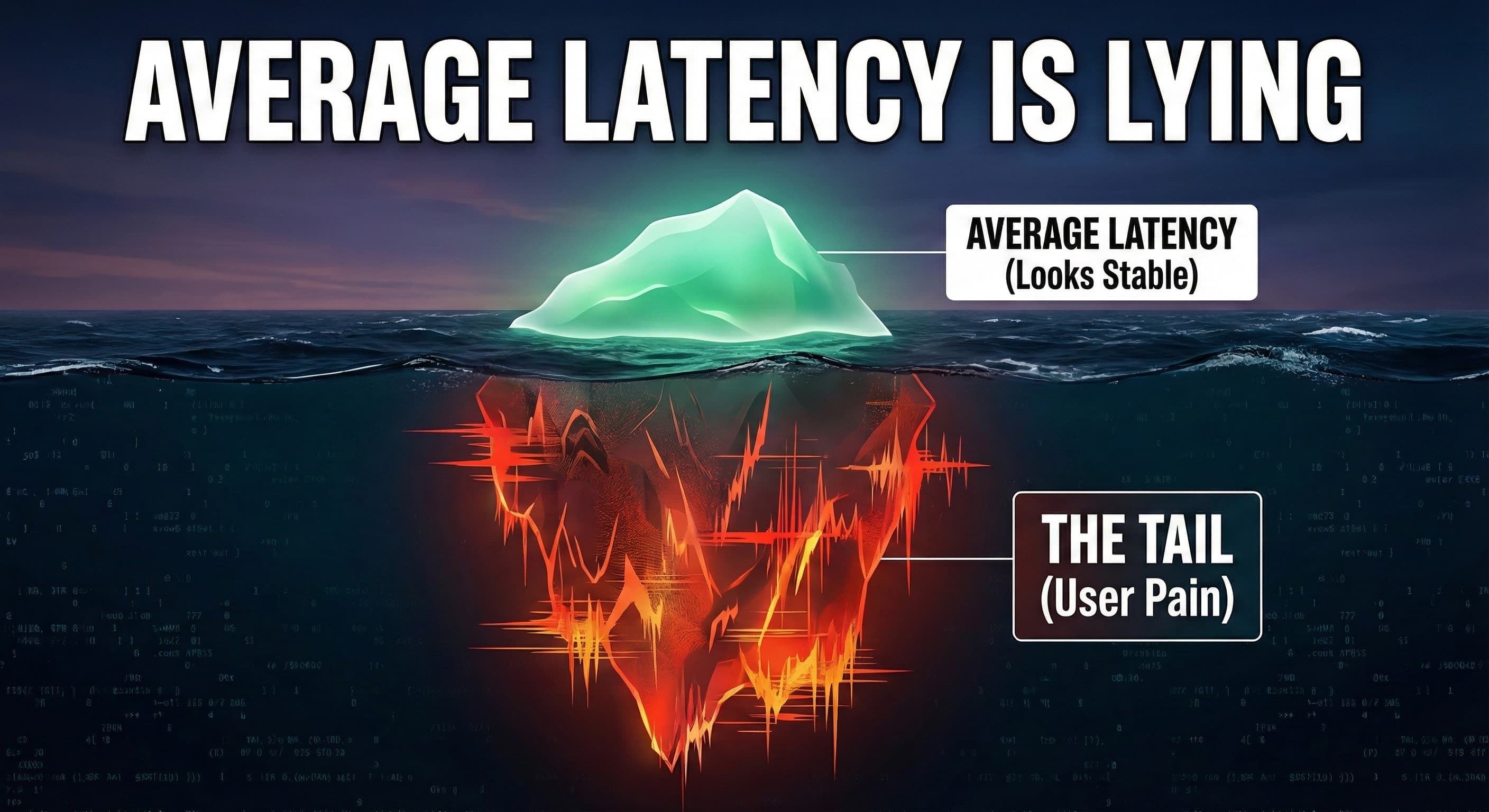
P95/P99 is where growth pressure shows up first — before average latency moves, before error rate spikes, and long before anything looks "broken."
Most scaling failures don’t start as outages. They start as a quiet shift in the slowest requests — the ones you rarely notice until users complain. That shift is tail latency.
The first warning sign is almost always the same: p95 and p99 get worse first, while your average latency barely moves. Dashboards stay calm. Teams keep shipping. And then one day the product suddenly “feels slow” — not because it broke, but because the system became constrained.
Context
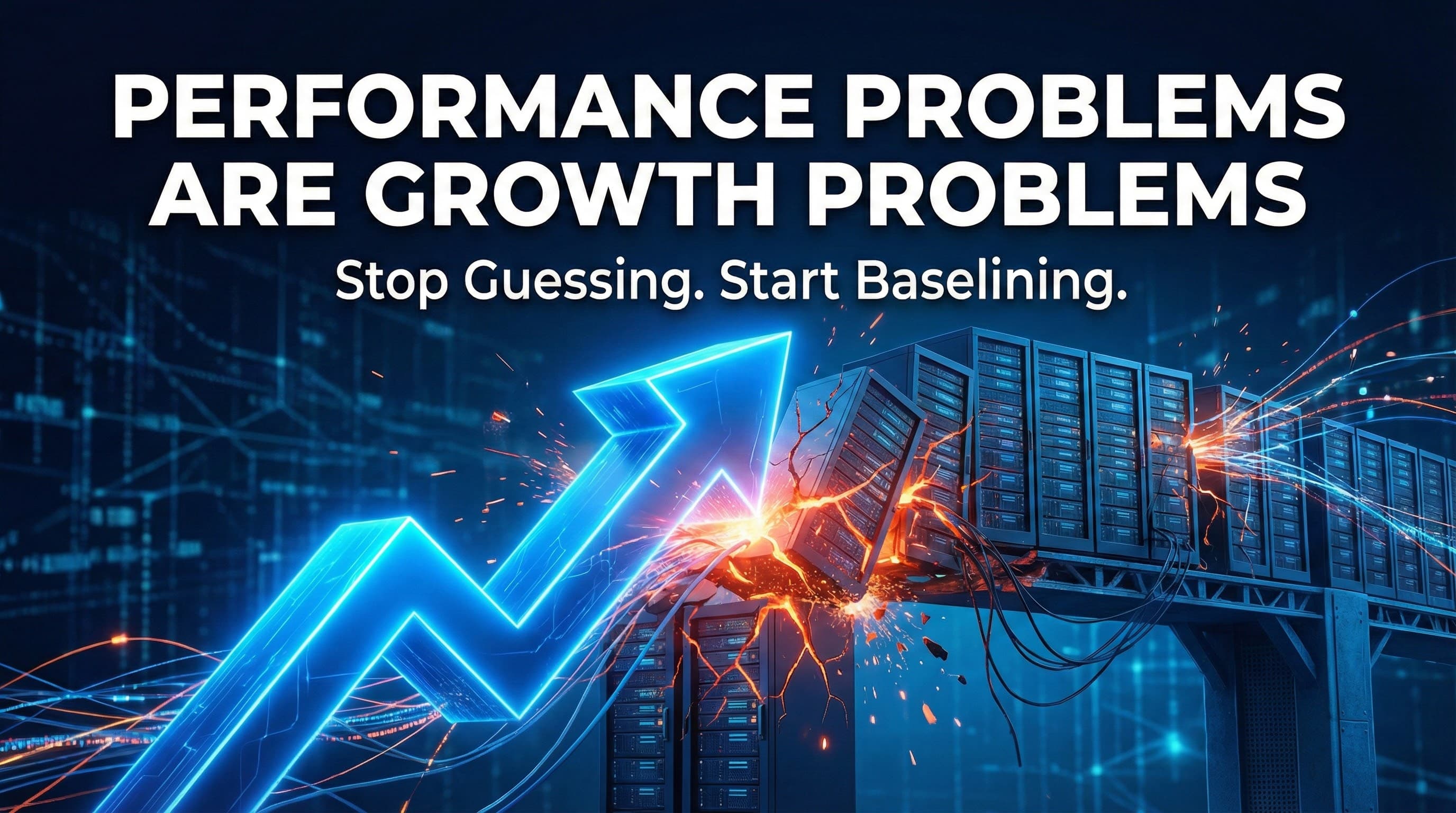
Part of the Growth series: Performance Problems Are Growth Problems . Growth doesn't just increase traffic — it changes system behavior. The mean stays calm while the tail breaks.
Most systems don’t fail suddenly — they degrade
In production, failure is often a slow drift. The system still returns responses. The error rate stays “acceptable.” But the experience becomes inconsistent: sometimes fast, sometimes stuck, sometimes timing out.
That inconsistency is what users remember. Not the mean. Not the average. The worst moments.
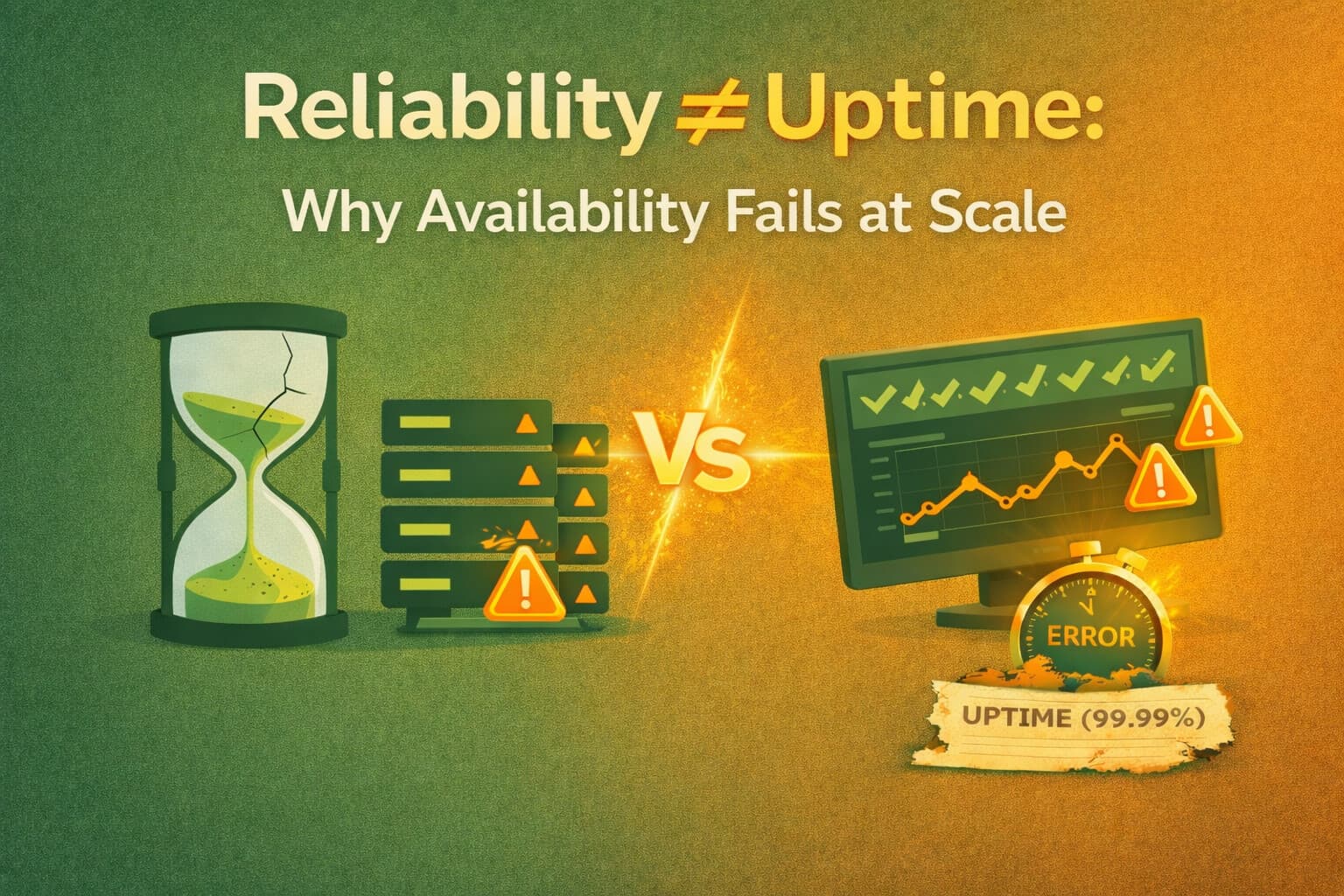
Reliability isn’t just “did it work?” — it’s “did it work consistently under pressure?”
Tail latency is where growth shows up first
The tail is where the system reveals what it’s waiting on. Waiting is what happens when capacity, contention, or dependency variance crosses a threshold.
When traffic grows, you don’t just push more requests through a pipeline — you push more bursts, more concurrency, more uneven usage, more “rare” events. Rare events stop being rare. And p99 becomes the place where rare events live.
A simple mental model
P50 tells you what happens when the system is comfortable. P95/P99 tells you what happens when the system is pressured. Growth lives in pressure.
Why p95/p99 gets worse before dashboards scream
Because most constraints don’t punish every request equally. They punish requests under certain conditions: a noisy tenant, a heavier payload, a cold cache, a lock conflict, a slow dependency, a depleted pool.
At first, only a small fraction of requests hit those conditions. That fraction grows with traffic and concurrency. The average stays stable, but the tail stretches.
That’s why teams often feel blindsided: the system was already warning them — just not in the metric they were watching.
What tail latency actually means (plain language)
Tail latency is not “slow code.” It’s usually waiting time. A request is waiting for:
- a free database connection
- a thread in a saturated pool
- a lock that someone else holds
- a queue that built up during a burst
- a dependency that is slow 1% of the time
In other words, tail latency is what happens when the system turns from “doing work” into “waiting for permission to do work.”
The four patterns that blow up the tail
Tail latency usually stretches because of one of these four constraints. Not ten. Not fifty. A few constraints dominate at scale.
1) Queueing (the most common)
Queueing shows up before CPU. DB pool wait time rises before DB CPU hits 90%. Thread pools queue before servers “look busy.” The system looks calm — because it’s waiting, not working.
2) Contention (locks, hot keys, hotspots)
Contention creates variability. Some requests pass, others collide. That variability doesn’t move the mean much, but it stretches the tail. Lock waits and hot rows are classic p99 killers.
3) Dependency variance (one slow downstream dominates)
A dependency can be “fast 99% of the time” and still define your p99. One slow external call on the critical path is enough to dominate the tail. Tracing slow requests is often the fastest path to truth.
4) Retry amplification (ghost traffic)
Retries multiply load precisely when the system is weakest. One request becomes two, then four. This stretches the tail and creates a feedback loop that can turn “slowness” into an incident.
What to watch (minimum viable tail visibility)
You don’t need perfect observability to catch tail pain early. You need a few signals that make waiting visible:
- P95/P99 latency by flow (checkout/search/login)
- Timeout rate aligned to those flows
- Queueing signals: DB pool wait, thread queue time, consumer lag
- Dependency latency percentiles for the top downstream calls
- Error budgets / SLOs so you can act before outages
If you can’t see those, the system will still degrade — you just won’t know why.
A constraint-first tail triage workflow
When p95/p99 gets worse, don’t jump straight to “add caching” or “scale servers.” Start with classification:
- Segment: Is it region/device/tenant/cache-state specific?
- Look for waiting: pool wait, thread queue time, backlog.
- Check contention: lock waits, hotspots, GC pauses.
- Trace slow requests: what dominates the critical path?
- Look for amplification: retries/timeouts rising together.
This prevents wasted weeks. It turns “it feels random” into “we know what the system is constrained by.”
Why optimizing averages makes the tail worse
A dangerous pattern in scaling teams is celebrating p50 improvements while p99 gets worse. That’s not a win. It’s moving pain to the users who matter most.
The most common way this happens: teams increase concurrency or add caching to make typical requests faster — and accidentally increase queueing, contention, or cache stampedes under peak.
If p50 improves but p99 worsens, you didn’t improve performance — you changed the shape of suffering.
If you want a repeatable way to validate improvements, the proof hub covers it end-to-end: distributions, segmentation, and constraint-aligned validation.
Proof hub
Performance Audit — the repeatable way to compare before/after without measuring noise.
What to read next
If this feels familiar, don’t wait for an outage to confirm it. Tail latency is the early warning system. These are the best next steps:
Continue the Growth series
Start at the hub: Performance Problems Are Growth Problems .
It maps the loop: baseline → isolate constraints → fix → validate → prevent regressions.
Final takeaway
If p95/p99 is getting worse, your system is already telling you the truth: you’re starting to wait.
Watch the tail, not the mean. Make waiting visible. Identify the constraint. Validate changes with distributions. That's how performance stops being mysterious — and becomes a growth advantage.
FAQ
Questions readers usually ask next
Why does P95/P99 get worse before average latency?
Constraints don't punish every request equally. They affect requests under specific conditions (cold cache, burst traffic, contention, slow dependencies). As traffic grows, more requests hit these conditions, stretching the tail while the average stays stable because most requests still follow the fast path.
What causes tail latency to increase?
Tail latency is usually waiting time: queueing (DB pool wait, thread queues), contention (locks, hot keys), dependency variance (one slow downstream call), and retry amplification (retries multiplying load when the system is weakest).
How do I know if P95/P99 degradation is a problem?
If P95/P99 is trending worse, your system is already constrained. Watch timeout rates, user complaints, and conversion drops. The tail is an early warning signal — if you can't explain why it's getting worse, you can't prevent it from becoming an outage.
If this sounds familiar…
Dashboards look stable, but users complain and the product feels inconsistent — because the tail is stretching.
What tail latency usually is
Not slow code. Waiting time: pool waits, queueing, contention, dependency variance, and retries.
Want proof, not opinions?
If your p95/p99 is trending worse, start with a 7-day baseline audit. We isolate the constraint and validate improvements with before/after distributions. See more about our audit.
Last updated
December 31, 2025