The core idea
A useful audit does not end with observations. It ends with artifacts that reduce disagreement and make the next operating decision easier.
Most buyers do not want "an audit." They want something they can put in front of product, engineering, and finance and say: this is what is wrong, this is what matters, and this is what we do next.
That is why deliverables matter more than audit vocabulary. If the work ends with a few smart observations and no operating package, the team will still be arguing two weeks later.
Context
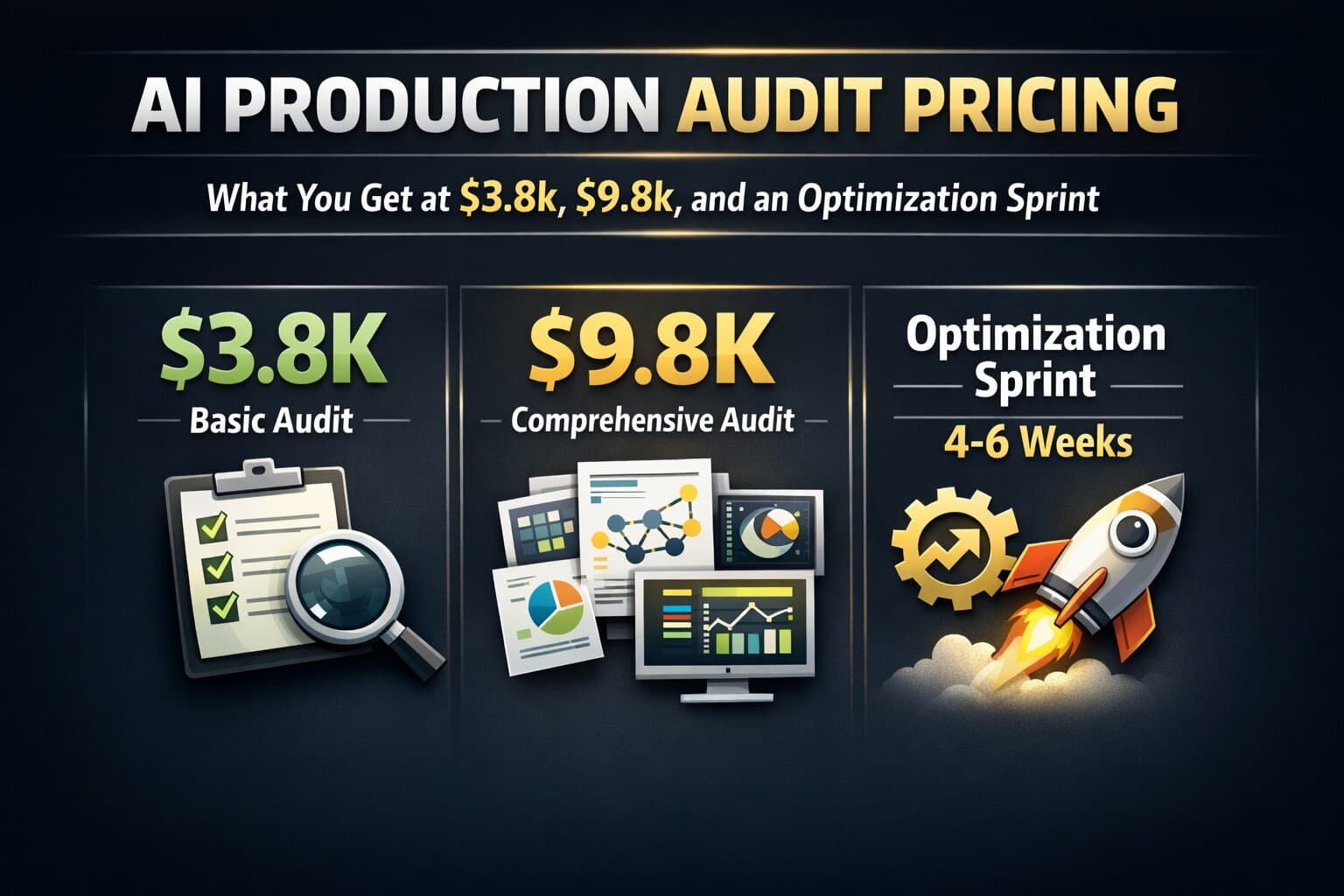
This article sits in the LLM Audit hub. If you are still deciding between packages, read AI Production Audit Pricing. If you want the scope difference between audit types, read GenAI Audit vs AI System Audit.
1) What buyers actually want at the end of an audit
Buyers say they want "clarity." In practice, they usually want four concrete things:
- something leadership can read in ten minutes
- something engineering can use without translating it into real work first
- something product can use to defend priorities
- something finance can use to justify spend or reject it
That is why a real AI Production Audit should produce a small stack of artifacts, not one big deck. Different stakeholders need different resolution. The executive view should be short. The engineering view should be specific. The roadmap should connect the two.
2) The minimum deliverables that separate an audit from a review
If you are paying for an audit, the output should be usable the same week it lands. The minimum stack looks like this:
Minimum audit packet
What should exist before anyone calls the work complete
1. Findings pack
The main failure modes, supporting evidence, likely causes, and why each one matters commercially.
2. Scorecard
A short view of quality, cost, latency, and release risk that leadership can scan quickly.
3. Root-cause map
What lives in retrieval, what lives in prompt/model behavior, what lives in tooling, and what lives in release process.
4. 30/60/90 roadmap
A sequence the team can actually execute instead of a pile of equally urgent recommendations.
If one of those is missing, the team will feel it almost immediately. No findings pack means the diagnosis is fuzzy. No scorecard means leadership cannot steer. No roadmap means the whole thing turns into a backlog grooming exercise.
3) Sample findings: what a useful audit packet looks like
Good findings are not written like abstract best practices. They read more like operating notes: here is the failure, here is the evidence, here is why it matters, and here is the fix order.
Finding 01
Good documents were filtered out before retrieval even started
Wrong answers were being blamed on prompt quality, but the larger issue sat upstream. Metadata filters were excluding the right documents for certain intents, so the model never had a chance to answer correctly.
Why it matters: this looked like a generation problem, so the team kept tuning prompts and increasing context. Both moves added cost without fixing accuracy.
Recommended next step: fix filter logic, inspect retrieval coverage by cohort, then retest before touching prompt strategy.
Finding 02
Cost drift came from retries and oversized context, not model price alone
The team assumed the model was simply too expensive. The audit showed a different pattern: repeated retries, long conversation carry-over, and unnecessary context inflation on easy requests.
Why it matters: switching models would have produced a partial win at best and possibly hurt answer quality. The real savings were sitting in request policy and context construction.
Recommended next step: add token attribution by stage, trim default context, and separate easy intents from expensive ones.
Finding 03
Release risk was higher than the answer-quality gap
The system had known quality issues, but the bigger operational problem was that prompt and KB changes were landing without any meaningful regression gates.
Why it matters: the team could not tell whether each release improved the system, broke a cohort, or just moved the failure around.
Recommended next step: build a minimum viable eval set from recent production failures and add release controls before shipping more fixes.
Those examples are useful because they change behavior. They tell the team what not to do first, which is often just as valuable as telling them what to do.
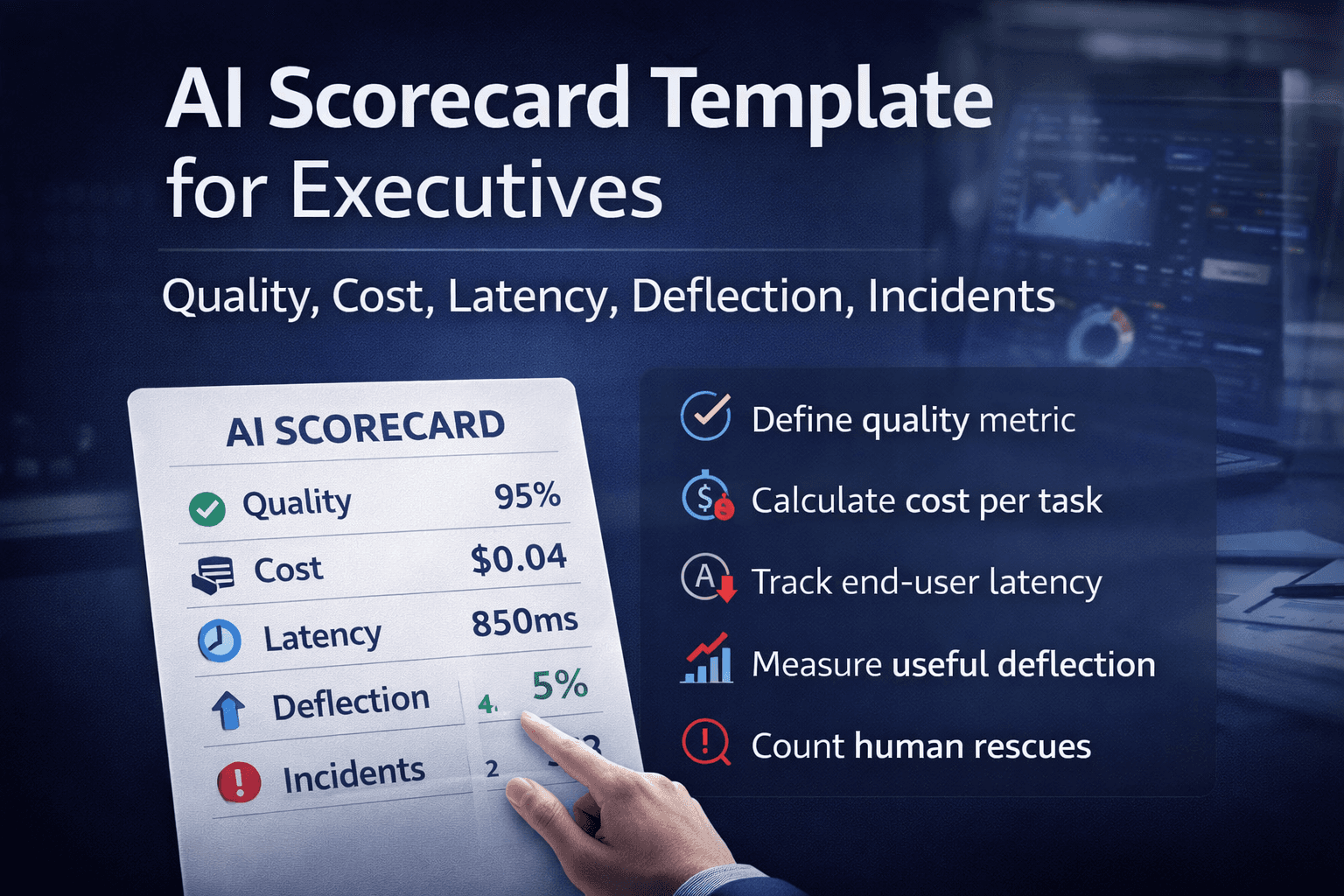
4) What the scorecard should look like
A good scorecard is not a dashboard dump. It is a one-page answer to the question: "Is this system getting healthier, riskier, or more expensive to defend?"
Example audit scorecard
Short enough for leadership, concrete enough for engineering
| Area | Current read | Why it matters | Decision |
|---|---|---|---|
| Quality | Red: wrong-answer rate concentrated in a few high-value cohorts | Trust loss is not evenly distributed. Averages hide the real damage. | Fix cohort-specific retrieval and release gates first |
| Cost | Amber: cost per successful task is rising faster than visible product value | Finance will challenge ROI before engineering finishes tuning | Attribute spend by stage and remove obvious waste before model swap decisions |
| Latency | Amber: p95 pain sits mostly in retries and tool round trips | Users feel the tail, not the average | Reduce retry amplification before optimizing model settings |
| Release risk | Red: no reliable regression gate for prompt or KB changes | Even successful fixes can regress silently after the next release | Stand up minimum viable eval coverage in the first 30 days |
The scorecard is where technical work becomes operationally legible. It lets you tell the difference between "we found interesting problems" and "we know what the business should fund next."
If you want the scorecard itself broken out in more detail, use AI Scorecard Template for Executives as the companion piece.
5) What a real 30/60/90 roadmap includes
The roadmap should not read like "do all the good things." It should give the team a sequence they can execute without mixing instrumentation, diagnosis, and optimization into one messy stream.
Example 30/60/90 roadmap
Stabilize first, improve second, operationalize third
30 days
- baseline scorecard agreed and reviewed weekly
- minimum tracing and attribution in place
- top 3 failure modes isolated with evidence
- no-regret fixes shipped first
60 days
- retrieval or tool-path fixes validated against the baseline
- minimum viable eval set created from real failures
- cost controls aligned to success metrics, not token totals alone
- release checklist defined for prompt, model, and KB changes
90 days
- regression gates running before risky releases
- scorecard tied to quarterly operating review, not just engineering review
- clear ownership for incidents, rollback, and roadmap refresh
- next funding decision backed by before/after evidence
Notice what is missing: giant transformation language. A useful roadmap does not try to sound ambitious. It tries to make the next ninety days hard to misunderstand.
6) Red flags: what polished but weak deliverables look like
Some audit deliverables look sophisticated because they are well designed. That is not the same thing as being operationally useful.
- a deck full of observations but no ranking of what matters most
- a dashboard screenshot instead of a scorecard with decisions attached
- a roadmap that lists ten parallel workstreams and no fix order
- recommendations with no evidence trail back to real failures
- no explicit line between "fix now," "fix later," and "ignore for now"
The easiest way to spot weak work is simple: if the deliverables sound smart but do not reduce disagreement inside the team, the audit did not go far enough.
7) What you should ask before buying
Before you buy any audit, ask for three things:
- a redacted example of how findings are written
- an example scorecard, even if the numbers are fake
- the shape of the 30/60/90 roadmap they usually produce
You are not asking for free work. You are checking whether the vendor has a repeatable operating format or is planning to invent the output after the project starts.
A practical test
Ask the vendor what they expect to hand to the CTO, what they expect to hand to the PM, and what they expect engineering to do with it the following week. If the answer is basically the same for all three, the deliverable design is probably weak.
8) Next steps
Want to see the output before buying the work?
If you need help choosing the right package, start with pricing. If you already want the audit itself, go straight to AI Production Audit.
FAQ
Questions readers usually ask next
What should an AI Production Audit deliver at minimum?
At minimum: a baseline scorecard, a findings pack with root causes and evidence, a prioritized roadmap, and a clear recommendation on what should happen next. If you finish an audit without a decision-ready package, the work was incomplete.
What makes a scorecard useful instead of decorative?
A useful scorecard ties metrics to decisions. It should show whether quality is acceptable, where cost is leaking, whether latency is inside budget, and whether release risk is under control. If it looks impressive but does not change what the team does next, it is decorative.
Why does a 30/60/90 roadmap matter?
Because production AI work usually breaks when teams mix diagnosis, instrumentation, and implementation into one blurry sprint. A 30/60/90 roadmap forces sequencing: stabilize, improve, then operationalize.
Can we ask for sample findings before we buy?
Yes. You should ask to see a redacted example of how findings are written, what evidence is included, and how recommendations are prioritized. If a vendor cannot show the shape of the output, you are buying blind.
What is a bad sign in audit deliverables?
A bad sign is a polished deck full of observations with no scorecard, no prioritization, no evidence trail, and no decision boundary between 'fix now,' 'fix later,' and 'do not fix.'
What leadership needs
A short scorecard, a clean read on risk, and a roadmap that explains why the next spend is justified.
What engineering needs
Specific findings, evidence, and a fix order that does not mix root-cause work with random tuning.
Need a decision-ready audit packet?
We can scope the audit around one live workflow and return findings, scorecards, and the 30/60/90 roadmap through the AI Production Audit intake.
Last updated
April 2, 2026