The core idea
Retrieved evidence is only the start. A RAG system becomes trustworthy only when the final answer stays bound to that evidence through selection, context construction, and grounded generation.
One of the most misleading moments in RAG debugging is this: someone opens the trace, sees the right document in the retrieved candidates, and says, "Retrieval looks fine." Then users keep getting hallucinated answers anyway.
That usually means the failure has moved downstream. The system is no longer missing the source entirely. It is failing to turn retrieved evidence into a grounded answer.
This is where many teams burn time on prompt tweaks. The real issue is often selection, context construction, source boundaries, citation discipline, or refusal policy. If you do not measure those layers, retrieval dashboards will keep telling you the system is healthier than it is.
Context
Part of the RAG Reliability hub. Related: RAG Recall vs Precision, RAG Wrong Answers Triage, Context Construction case study, RAG Optimization Service.
What people mean when they say retrieval looks fine
Usually they mean one of three things:
- the correct document appears somewhere in the top-k candidates
- retrieval scores look reasonable on average
- search demos for a few hand-picked queries look convincing
None of those prove that the final answer is grounded. They only prove that retrieval is not obviously broken at the first layer.
In production, the better question is: did the answer stay tightly supported by the evidence that actually reached the model?
The trap: retrieval quality is not the same thing as groundedness
Retrieval quality asks whether the system surfaced relevant evidence. Groundedness asks whether the answer stayed inside that evidence.
Those are related, but they are not the same metric:
- high candidate recall can coexist with low groundedness
- good rerank scores can coexist with unsupported claims
- citations can exist even when the cited text does not support the answer
This is why teams that only measure recall or top-k quality often underestimate hallucinations. The problem is no longer "can we find the source?" It is "can we keep the answer bound to the source?"
1) The right source is retrieved, but it never reaches the model cleanly
A common hidden failure is selection recall. The correct source is in the candidate set, but it is dropped, truncated, or demoted before the final prompt is assembled.
Typical causes:
- reranker favors broad relevance over answer-critical passages
- context budget truncates the useful chunk away
- dedupe rules keep the wrong sibling chunk
- selection logic prefers diversity over decisive evidence
From the outside, retrieval looks healthy. In reality, the model never got the decisive evidence in a usable form.
2) The right source is present, but noisy context overwhelms it
This is one of the most common causes of post-retrieval hallucination. The answer-supporting chunk is there, but it is surrounded by too much irrelevant or weakly related context.
The model then does what generative models do: it synthesizes. That synthesis feels like hallucination because the answer is no longer tightly anchored to one source.
Symptoms:
- higher k makes answers sound less certain or more inconsistent
- answers combine details from multiple nearby but incompatible passages
- the same query produces different wrong answers on different runs
This is not primarily a retrieval miss. It is a context precision problem.
3) Chunk boundaries break evidence even when retrieval looks correct
Sometimes the right document and the right section are retrieved, but the chunking strategy split the evidence across boundaries that no single chunk preserves well.
The model sees a partial rule, a missing qualifier, or a policy exception without the surrounding clause that makes it true. The result is not exactly retrieval failure. It is evidence fragmentation.
Common examples:
- pricing exceptions separated from the main policy
- eligibility criteria split from the conclusion
- API parameter rules split across heading and body
- multi-step procedures broken across chunks with no preserved sequence
In logs, it can look like retrieval found the right material. In reality, the model received only enough evidence to be dangerously plausible.
4) The model mixes claims across sources
RAG systems often concatenate passages from multiple documents with weak source boundaries. That makes it easy for the model to fuse claims that should stay separate.
This is especially common when:
- different product versions are mixed in one context
- old and new policy docs both appear
- FAQ content is combined with formal policy content
- citations are attached after generation rather than claim-by-claim during generation
The output then feels hallucinated because the model invents a "clean combined answer" from incompatible evidence.
Important distinction
Source mixing is not the same thing as low recall. You may already have the right evidence. The failure is that the system lets the model blend evidence that should remain scoped and attributable.
5) Citations are decorative, not evidence-bound
Many RAG systems display citations, but the citations are attached too loosely. The answer is generated first, then the system finds a nearby source to justify it. That is not grounded generation. It is decorative attribution.
What to look for:
- the cited passage is related but does not support the specific claim
- multiple claims in one sentence map to only one citation
- the system cites the right document but wrong clause
- citation coverage looks good while unsupported claim rate stays high
Citation validity is a separate metric from citation presence. If you do not track that difference, the system will look more grounded than it is.
6) The prompt rewards answering over abstaining
Even when retrieval is decent, the generation policy can still force hallucination. If the prompt implicitly rewards completeness and confidence more than evidence discipline, the model will fill gaps instead of refusing.
Common prompt-level mistakes:
- "Always be helpful" with no strong refusal policy
- citation instructions that are weaker than answer-completion instructions
- no rule for what to do when evidence is partial or conflicting
- templates that encourage polished synthesis over claim-level support
This is why prompt changes sometimes seem to improve fluency while making hallucinations harder to notice.
What to measure instead of retrieval alone
If retrieval "looks fine" but trust is still low, add these metrics:
- Selection recall: was the decisive source included in final context?
- Context precision: how much of final context was actually useful?
- Contradiction rate: how often did final context include conflicting evidence?
- Grounded answer rate: how often was the final answer fully supported?
- Citation validity: did cited passages actually support each claim?
- Unsupported claim rate: how often did the answer go beyond evidence?
- Abstention correctness: did the system refuse when evidence was insufficient?
This metric set is what separates a retrieval dashboard from a groundedness dashboard.
A 20-query diagnostic to prove the failure layer
Take 20 production queries that users marked as wrong, risky, or untrustworthy. For each query, inspect:
- Was the right source in the top candidate set?
- Was it included in final context?
- Was the final context mostly relevant or mostly noisy?
- Did the answer stay inside the evidence?
- Did each claim have valid supporting citation?
- Should the system have abstained instead?
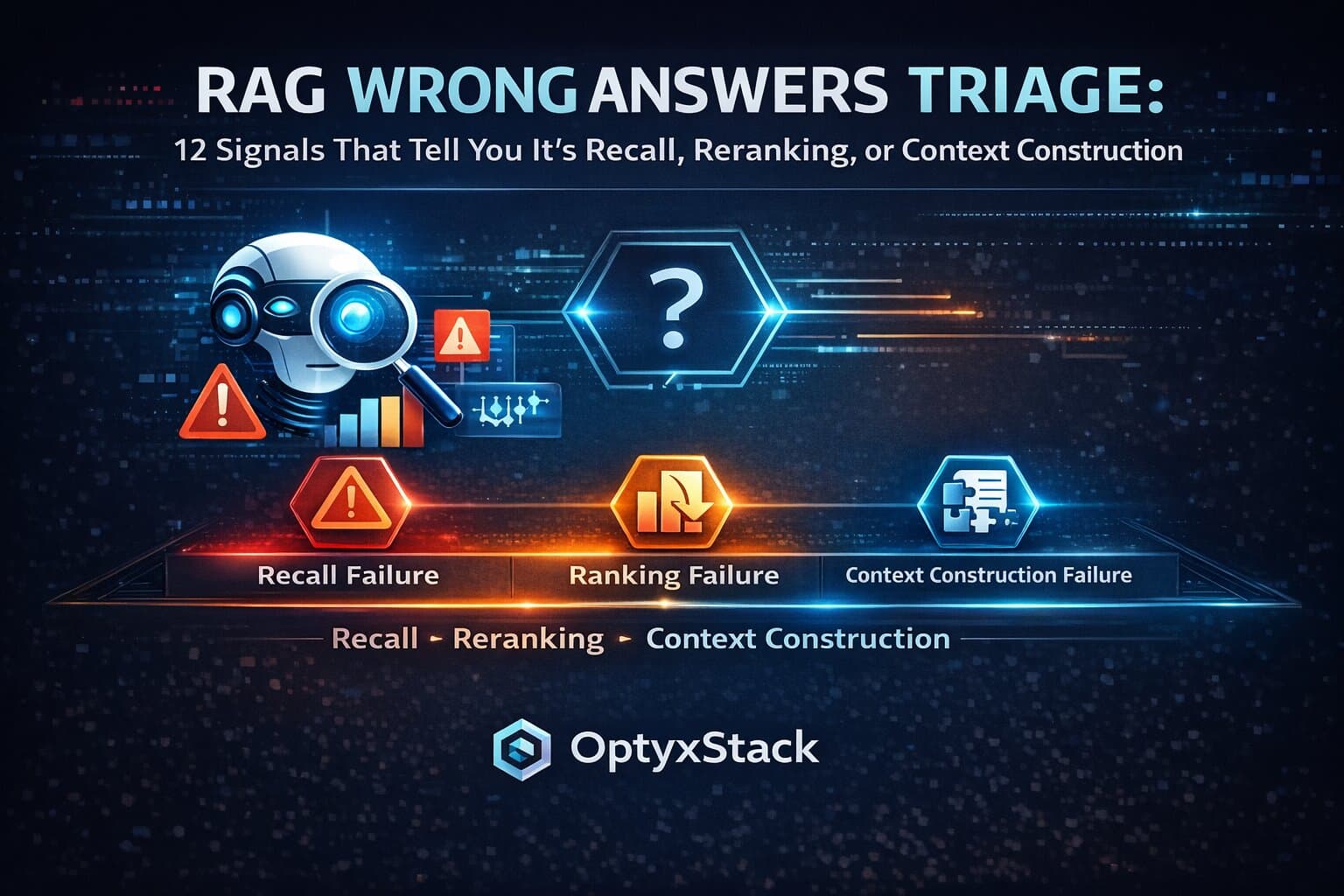
By the end of that exercise, most teams can classify the dominant failure mode quickly:
- retrieval problem: right source not surfaced
- selection problem: surfaced but not passed through
- context construction problem: passed through but drowned or fragmented
- grounding policy problem: model answered beyond the evidence
If you need a broader retrieval diagnostic first, start with RAG Recall vs Precision. If the source already shows up reliably, shift focus to the post-retrieval layers above.
Fix order when retrieval is not the main problem
When candidate recall is acceptable, the best fix order is usually:
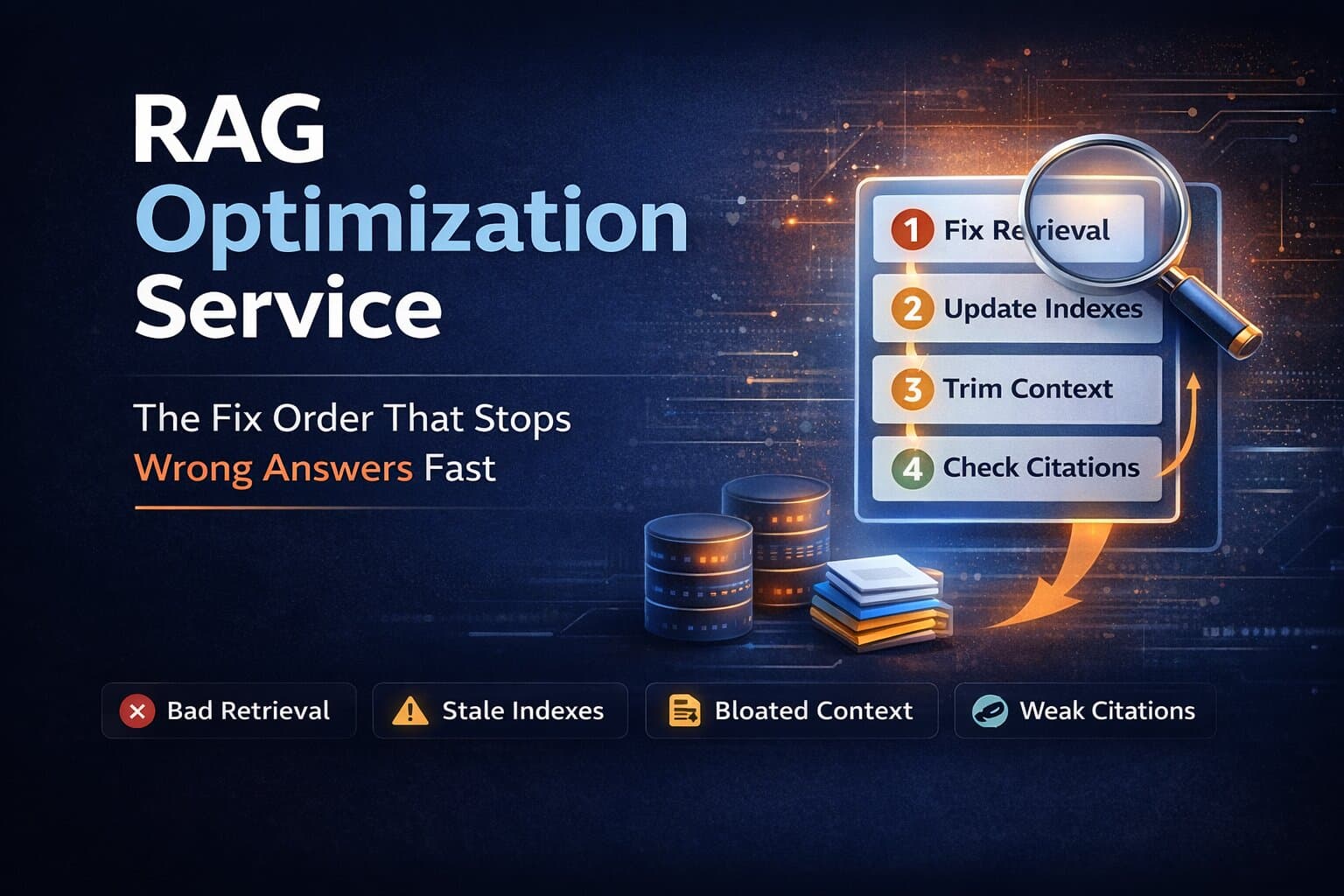
- tighten final-context selection rules
- reduce noise and contradictions in context
- improve chunk boundaries and passage compaction
- enforce citation validity and answer-to-evidence binding
- strengthen refusal and abstention policy
- only then tune prompts or models for style and tone
This is the same pattern we see in real systems: the model is often blamed too early. The case study on context construction fixes shows how much groundedness can move once those layers are cleaned up.
Need a trace-backed diagnosis?
We run RAG audits that separate retrieval, selection, context construction, and groundedness failures so teams stop patching the wrong layer. If the system already retrieves the right source but still hallucinates, that is exactly the kind of problem an audit should isolate quickly.
FAQ
Questions readers usually ask next
How can RAG hallucinate if retrieval is working?
Because retrieval success only means the right source was found somewhere in the pipeline. The system can still fail if the source is not selected into final context, is mixed with contradictory chunks, is truncated at the wrong boundary, or if the model is allowed to answer beyond the evidence.
What is the difference between retrieval quality and groundedness?
Retrieval quality asks whether the right source was surfaced. Groundedness asks whether the final answer stayed supported by the evidence that actually reached the model. You need both; one does not guarantee the other.
What metrics should I add when RAG answers are still hallucinated?
Add selection recall, context precision, contradiction rate, citation validity, grounded answer rate, unsupported claim rate, and abstention correctness. Those metrics show whether the failure happens after retrieval rather than inside retrieval itself.
When should we stop tuning prompts and run a real audit?
If the right documents appear in logs but users still get unsupported answers, citations are weak, or different cohorts break in different ways, stop prompt-tweaking. You need a trace-backed audit of selection, context construction, and evaluation before more changes make the system harder to reason about.
What this article helps you avoid
Blaming the embedding model or endlessly tweaking prompts when the dominant failure is actually post-retrieval.
What to inspect first
The final context that reached the model, not just the broader candidate list that made the retrieval dashboard look healthy.
Need groundedness you can prove?
We baseline groundedness, citation validity, and post-retrieval failures, then ship the fix order behind an AI Audit and Optimization Sprint.
Last updated
March 9, 2026