The core idea
The cheapest safe route is not the smallest model everywhere. It is the smallest model that still preserves successful outcomes for that specific cohort.
Model routing is one of the few cost levers that can create step-function savings. It is also one of the easiest ways to silently damage quality if you route by optimism instead of evidence.
The goal is not "use the small model more often." The goal is to send each workload to the cheapest path that still preserves the outcome you care about. That requires a routing policy, fallback policy, and eval discipline, not a blanket downgrade.
This article explains when small models should be the default, when large models should stay in the path, and how explicit fallback rules keep the cost savings real.
Context
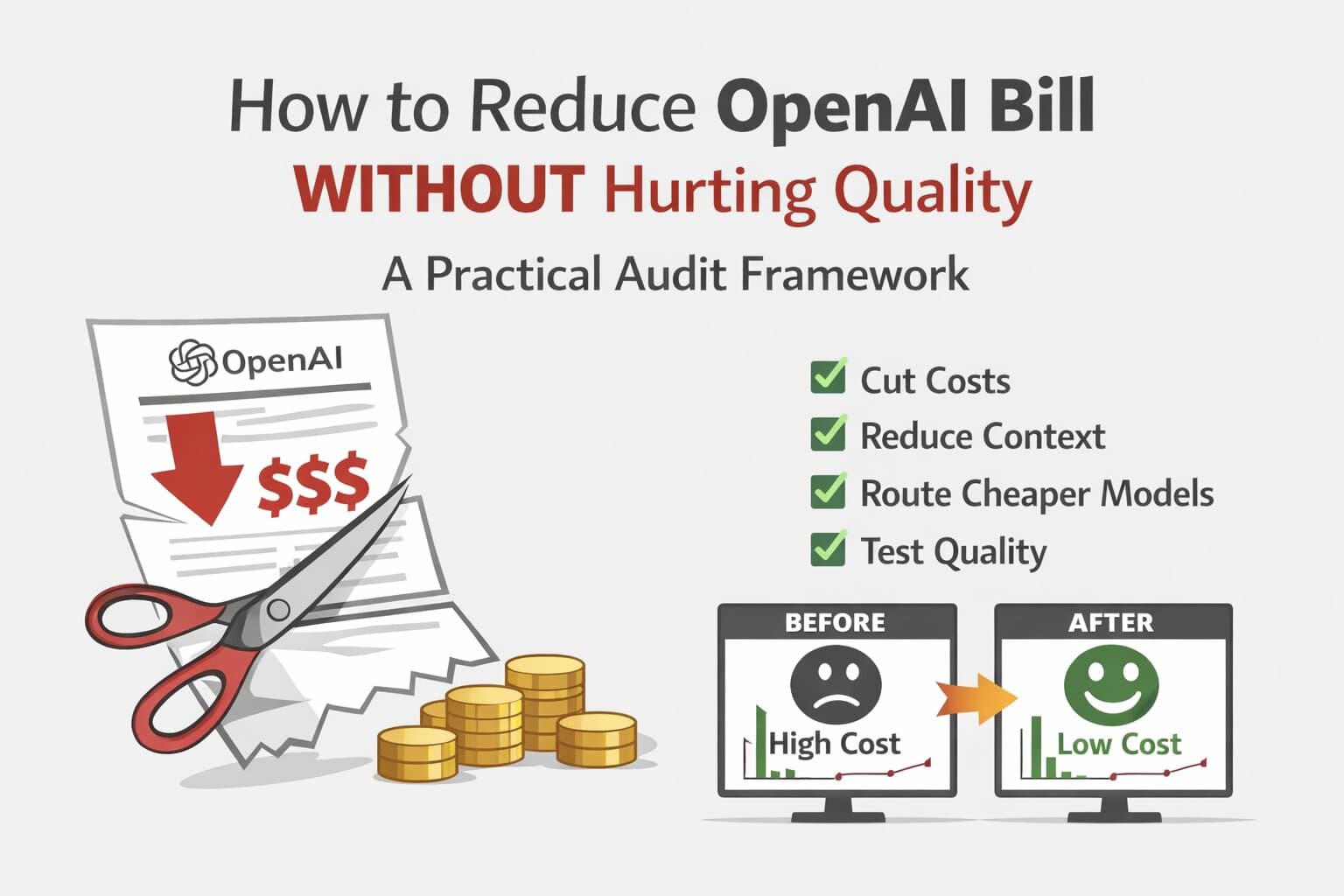
Part of the Cost Optimization hub. See also: Reduce OpenAI Bill Without Hurting Quality, LLM Cost Optimization Service, Cost per Successful AI Task, Caching for Cost & Correctness, and the model routing cost reduction case study.
Why model routing is not just a cost trick
Routing changes the operating model of your AI system. It affects cost, latency, reliability, and failure shape at the same time. That is why it should be treated as a product and systems decision, not just a procurement decision.
In a healthy routing policy, the small model handles cheap predictable work, the large model handles tasks that need more headroom, and the fallback path catches uncertainty or failure without turning into a hidden retry storm.
In an unhealthy routing policy, teams do one of two things:
- everything goes to the large model because nobody trusts segmentation
- everything is pushed to the small model and quality quietly degrades until humans compensate
Important
Routing is only cheaper if the smaller path still produces successful outcomes. Cheap failures and constant fallbacks can make the route look efficient while unit economics get worse.
The three roles in a routing policy
1) Small model: the default workhorse
The small model should carry the boring, repetitive, high-volume workload. It is your default path for tasks where structure matters more than deep reasoning.
2) Large model: reserved for complexity or risk
The large model is not "better everywhere." It is the path you reserve for tasks where ambiguity, reasoning depth, or business risk justify the cost premium.
3) Fallback model: recovery path, not hidden chaos
A fallback path exists to recover from low confidence, hard failures, or explicit validation misses. It should be visible in logs and bounded by policy. Otherwise it turns into silent double-spend.
When small models should handle the request
Small models are strongest when the task is narrow, patterned, and easy to validate.
Good small-model workloads:
- classification and labeling
- entity extraction and normalization
- short summarization with fixed structure
- FAQ-style responses with constrained source material
- simple drafting or rewriting tasks with strict templates
- first-pass support routing and triage
Why these work well:
- output space is constrained
- mistakes are easy to detect automatically
- the cost of escalation is lower than always paying for the large model
- latency matters, and smaller models often help there too
If you cannot describe the task with a small number of acceptable outputs or validation rules, it may not belong on the cheapest route yet.
When large models should stay in the main path
Large models earn their place when the task is ambiguous, long-horizon, or expensive to get wrong.
Keep the large model in the main path when you see:
- multi-step reasoning with weak intermediate observability
- policy, compliance, or legal interpretation
- complex tool orchestration or planning
- long-tail enterprise questions with sparse prior examples
- workflows where one bad answer creates real downstream cost
The mistake here is comparing only per-request price. The right comparison is cost per successful outcome after accounting for failure cleanup, retries, support escalations, or human review.
| Task type | Default route | Why |
|---|---|---|
| Short classification / extraction | small model | structured, cheap to validate, high volume |
| Customer FAQ with stable KB | small model + explicit fallback | most queries are repetitive, hard cases can escalate |
| Policy-heavy assistant | large model or high-risk route | mistakes are expensive and ambiguity is real |
| Agentic workflow with tools | large model or selective route | planning and tool recovery often need more headroom |
What a good fallback policy actually does
Fallback is not "if unsure, call the most expensive model." A good fallback policy does three things:
- defines clear triggers such as low confidence, failed validation, timeout, or high-risk intent
- bounds the recovery path so you do not create multi-call cascades
- logs the fallback reason so you can measure whether the route is healthy
Good fallback patterns:
- small model fails schema validation → retry once with large model
- small model reports low confidence on a policy question → route to large model
- primary model times out → fallback to a latency-optimized model with narrower scope
- unsafe or high-risk cohort → fallback to human review instead of another model call
If your fallback path is invisible in dashboards, you do not have routing control. You have hidden spend.
Signals to route on
Good routing policies are based on observable signals, not vibes.
Useful routing signals include:
- intent or task type
- query length and structural complexity
- retrieval confidence or groundedness risk
- user tier or business importance
- required output format strictness
- prior fallback history for that cohort
Signals teams overuse badly:
- "this prompt looks simple" without eval evidence
- global confidence scores with no cohort calibration
- cost alone, ignoring failure cost and rework cost
A practical routing matrix
| Cohort | Primary route | Fallback | Gate |
|---|---|---|---|
| FAQ / low-risk support | small model | large model on low confidence | answer quality and reask rate |
| Structured extraction | small model | retry with large model on schema fail | schema validity and manual correction rate |
| Policy / compliance | large model | human review or narrower workflow | groundedness, refusal correctness, escalation rate |
| Complex tool-driven workflow | large model | specialized fallback or human handoff | task completion and loop rate |
What to measure before and after routing
Routing should never be judged by invoice reduction alone. Track the operating metrics that tell you whether the cheaper path is actually safe.
- Cost per Successful Task: the main economic metric
- quality or groundedness: by cohort, not just global average
- fallback rate: how often the cheap path escalates
- reask / escalation rate: hidden signs of degraded user trust
- P95 latency: routing often changes speed as well as spend
- failure cleanup cost: human review, retries, or downstream correction
If cost drops 30% but fallback rate doubles and human cleanup rises, the routing policy is not actually healthy.
The rollout order that avoids silent quality loss
- segment traffic into clear cohorts
- baseline cost, quality, fallback, and latency by cohort
- route the easiest cohort first
- add explicit fallback triggers and logging
- expand gradually only when before/after evals hold
This is slower than a global switch, but it is the difference between a routing policy and a rollback incident.
Common routing mistakes
- Routing by hope: "the mini model seems fine now"
- One rule for everything: no cohort segmentation
- Invisible fallbacks: extra model calls hidden from dashboards
- No validation gate: cheaper route fails quietly
- Global averages only: one expensive or risky cohort gets masked
The common pattern behind routing failure is simple: teams optimize average model cost and ignore failure concentration.
Want help designing routing that cuts cost safely?
Good routing is a measured control system. It tells you which cohorts belong on small models, which still need large models, and when fallback should escalate to another model versus a safer workflow.
Need routing rules with eval proof?
We baseline cost per successful task, identify model overkill, design routing and fallback rules, and validate them with before/after benchmarks so the savings hold up in production.
FAQ
Questions readers usually ask next
When should I route to a small model first?
Route to a small model first when the task is repetitive, low-risk, and structurally predictable: classification, extraction, short summarization, FAQ-style responses, straightforward transformations, or simple support intents. The key is that you already have eval evidence showing the smaller model is good enough for that cohort.
When should I keep a large model as the default?
Keep the large model in the main path when the task is high-risk, ambiguous, multi-step, policy-sensitive, or requires broad reasoning headroom. If mistakes have a material user, compliance, or revenue impact, the larger model may be the cheaper option once failure cost is considered.
What is a fallback model in a routing policy?
A fallback model is the recovery path when the primary route is low-confidence, fails a validation rule, or times out. It should be an explicit policy with triggers and logging, not a silent extra call hidden inside the stack.
How do I know if model routing is safe?
Run before/after evals by cohort. Measure cost per successful task, answer quality or groundedness, escalation rate, and latency. Routing is safe only if the smaller model reduces cost without quietly increasing wrong answers, reasks, or fallback volume.
Should fallback always escalate to the largest model?
Not always. Sometimes the right fallback is a safer prompt, a narrower tool path, human review, or a different model family. Escalating every uncertain case to the most expensive model can erase the savings you were trying to create.
What this article helps you avoid
Blanket downgrades that look good on the invoice but push more failures, reasks, and hidden fallback spend into the system.
What to instrument first
Cost per successful task, fallback rate, and quality by cohort. Without those, routing changes are mostly guesswork.
Need routing that saves money without hiding regressions?
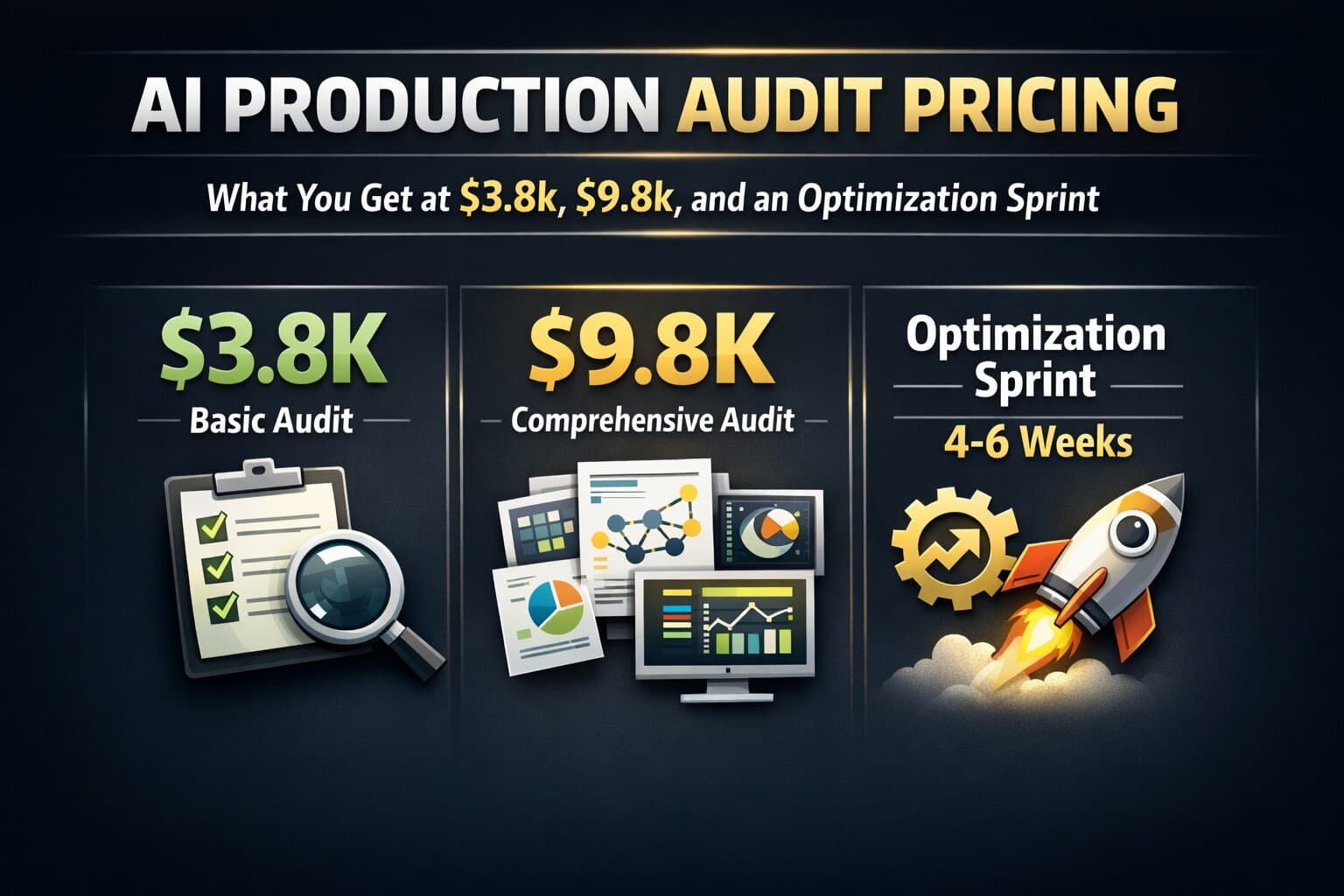
We design cheap-first routing, fallback rules, and eval gates through an AI Audit and Optimization Sprint.
Last updated
March 12, 2026