The core idea
Enterprise rollout readiness is reliability plus evidence: not only whether the model can answer, but whether the team can detect, contain, and explain failures before trust breaks.
Enterprise rollout changes the question from "does the feature work?" to "does it work predictably, under pressure, across the cohorts that matter, with a team that can contain failures quickly?"
Many AI teams reach rollout with a system that looks convincing in demos and pilot accounts but is still fragile in production terms. Wrong answers are not classified. Tail latency is vague. Tool failures are noisy. Rollback is improvised. Support teams are expected to absorb the gaps.
This checklist is meant to catch that moment before it becomes an enterprise trust problem. Use it before broader rollout, before a large customer expansion, or before promising reliability that the current stack cannot yet defend.
Context
Part of the LLM Evaluation hub. Related reading: LLM Evaluation Framework, Minimum Viable Eval Starter Kit, Golden Dataset from Real User Logs, LLM Observability, Reliability Retainer.
Why enterprise rollout is a different reliability bar
Pilot success can hide structural weakness. Enterprise rollout exposes it because the system now has to survive:
- more cohorts: different tenants, data shapes, languages, document types, policy versions
- more operational pressure: concurrency spikes, stricter support expectations, tighter latency tolerance
- more scrutiny: leadership review, customer escalations, vendor-risk questions, rollback demands
- more consequence: a bad answer in one key account can matter more than a hundred clean demo runs
That is why enterprise readiness is not a marketing milestone. It is a reliability milestone with evidence requirements.
How to use this checklist
Mark each signal as No, Partial, or Yes.
- No: this risk is controlled and you can show evidence
- Partial: it is handled only for some cohorts, environments, or releases
- Yes: this is a real rollout gap right now
Treat any critical Yes as a rollout blocker even if the total score looks acceptable. Enterprise rollout fails through specific high-severity gaps, not just through average weakness.
| Mark | Meaning | Recommended action |
|---|---|---|
| No | Controlled and evidenced | Keep monitoring during rollout |
| Partial | Not reliable across all cohorts or conditions | Tighten controls before expansion |
| Yes | Known production gap | Block or narrow rollout |
1) Outcome reliability
1. Core tasks succeed in demos but not consistently in real cohorts
If the product team can show success stories but cannot show cohort-level success rates by tenant, workflow, or intent, rollout confidence is mostly anecdotal.
2. The system answers when it should escalate or abstain
Enterprise users care less about eloquence than boundary discipline. A system that guesses instead of escalating creates hidden trust debt that gets more expensive after rollout.
3. Reliability depends on one or two "easy" workflows
If the success story is concentrated in one narrow path, you do not yet have rollout readiness. You have a strong demo path.
4. Human reviewers still need to verify too much output manually
If operations or support teams must re-check most answers by hand, the system may look adopted while still delivering little reliable leverage.
What to prove here
Measure task success, escalation rate, re-ask rate, and major failure classes by cohort. Enterprise rollout should be supported by evidence on real user paths, not only curated examples.
2) Grounding, retrieval, and tool-path reliability
5. Retrieval works for happy-path queries but breaks on versioned, literal, or long-tail queries
Enterprise environments amplify literal-heavy and edge-case queries: policy names, SKUs, internal codes, version tags, customer-specific terminology. If retrieval quality is uneven there, rollout will expose it quickly.
6. Citations exist, but support quality is weak or inconsistent
Citation presence is not enough. If the cited material does not support the claim, the system looks safer than it is.
7. Tool calls are correct most of the time, but failure handling is vague
Tool success rate alone is not enough. You need to know what the system does when a tool times out, returns partial data, or conflicts with retrieval evidence.
8. Multi-step workflows do not have stable completion or handoff behavior
Enterprise reliability often breaks in orchestration rather than single-turn answers. The system needs predictable workflow completion, interruption handling, and fallback logic.
9. There is no clear boundary between "grounded answer" and "best effort synthesis"
If the system can switch silently between evidence-bound and speculative behavior, enterprise users will struggle to know when to trust it.
| Signal | Likely gap | What to measure |
|---|---|---|
| Edge cohorts get weaker answers | Retrieval / grounding segmentation | Recall proxy, groundedness by cohort |
| Tool path is flaky under load | Workflow reliability | Tool success, retries, completion rate |
| Citations look present but do not prove claims | Grounding discipline | Citation validity, unsupported claim rate |
3) Operational and serving reliability
10. Average latency looks fine, but tail latency breaks real workflows
Enterprise rollout is where P95 and P99 start to matter commercially. If slow paths are painful for onboarding, support, or internal operations, averages will hide the real risk.
11. Capacity assumptions are based on pilot traffic, not expansion traffic
Rollout readiness requires concurrency thinking: can the pipeline survive more users, larger contexts, more tool usage, and bursty business hours without queueing collapse?
12. Timeout, retry, and fallback behavior are not explicitly budgeted
Reliability degrades fast when retry storms and unclear fallback rules appear under load. If these rules are not documented, rollout will turn them into production surprises.
13. The team cannot separate model latency from retrieval, rerank, or tool latency
Without stage-level visibility, every performance problem gets misdiagnosed as "the model is slow." That slows both fixes and rollout decisions.
4) Release controls and rollback safety
14. Prompt, model, or retrieval changes can ship without regression gates
Enterprise rollout with no release gate is operational debt. Every change becomes a live experiment on customers.
15. Canary, shadow, or staged rollout paths do not exist
If the only release mode is "everyone gets the new behavior," the system is not rollout-safe. Larger exposure requires narrower blast radius.
16. Rollback is technically possible but not operationally rehearsed
A rollback plan is not the same as rollback readiness. The team should know what flips back, what data dependencies remain, and how to confirm the rollback worked.
17. There is no explicit sign-off model for quality, policy, and operations
If nobody owns the release decision across quality, support, and reliability, risky changes will drift through by default.
Release rule
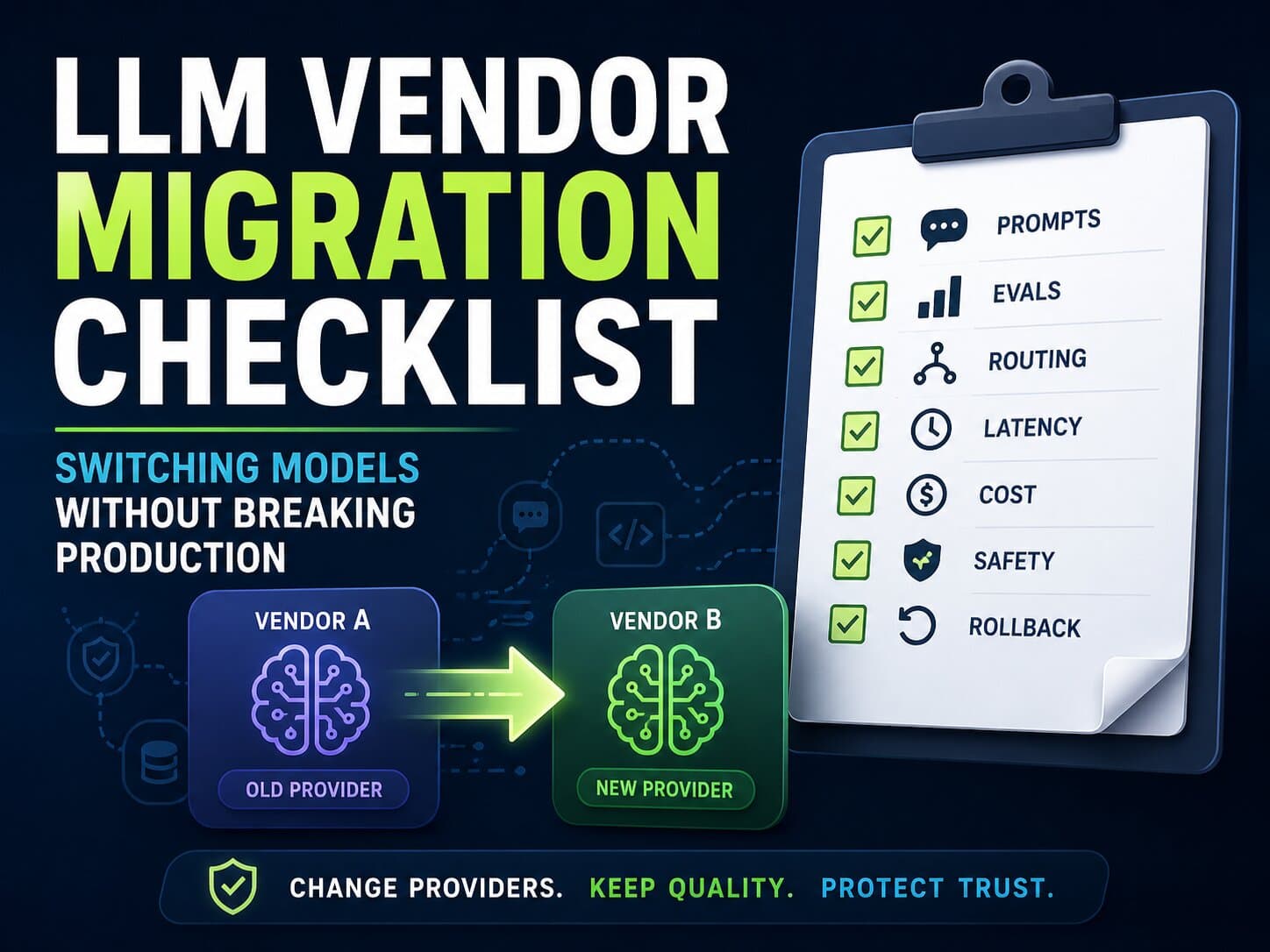
Broader rollout should require a versioned baseline, gated test results, canary or staged path, and a rollback plan with named owners. If one of those is missing, the rollout is relying on luck.
5) Observability, ownership, and enterprise evidence
18. Bad answers cannot be traced end-to-end
If a customer reports a failure and the team cannot reconstruct request, retrieval, tools, output, and timing in one trace, enterprise review will stall and repeated failures will stay expensive.
19. Monitoring stops at volume, latency, and cost
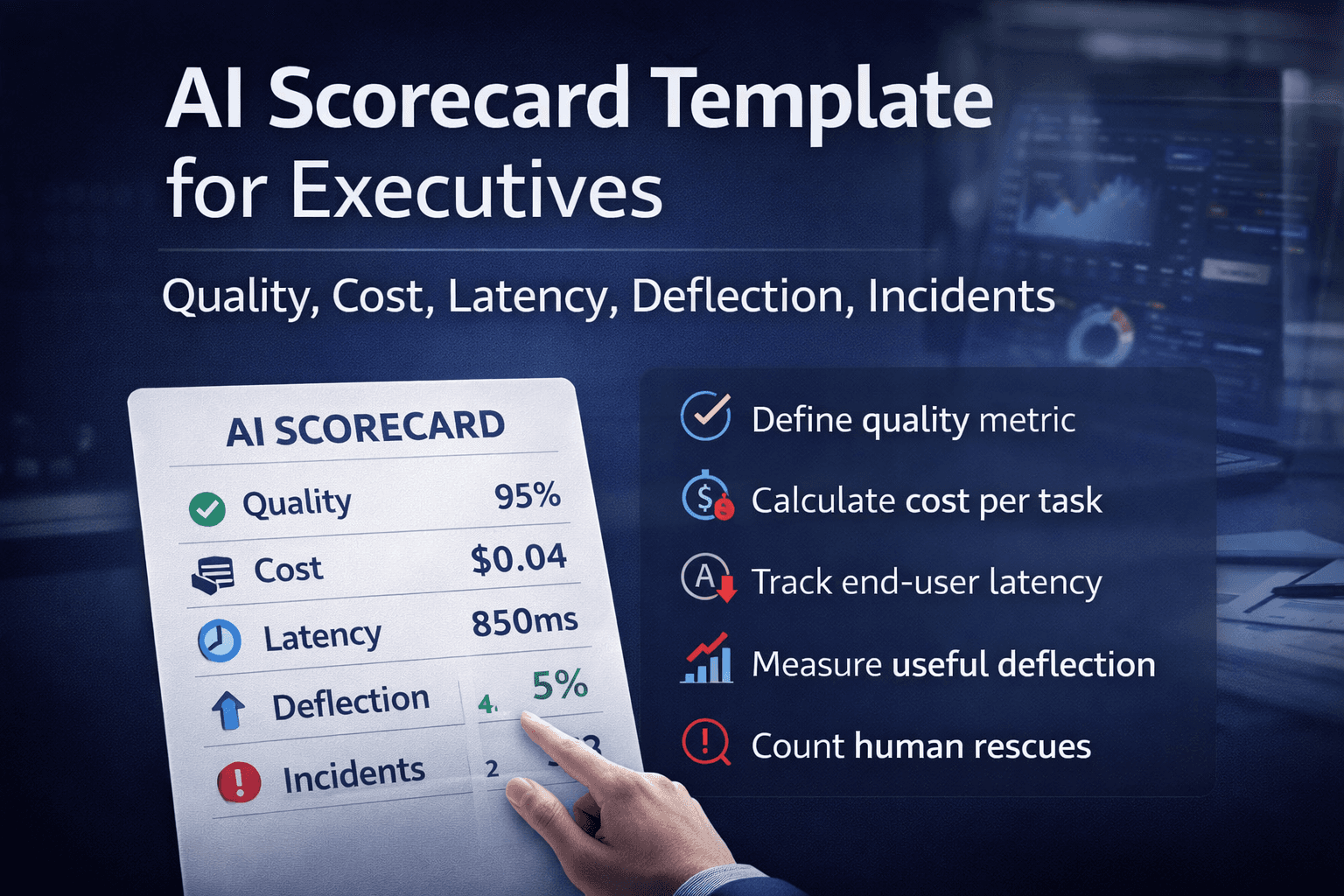
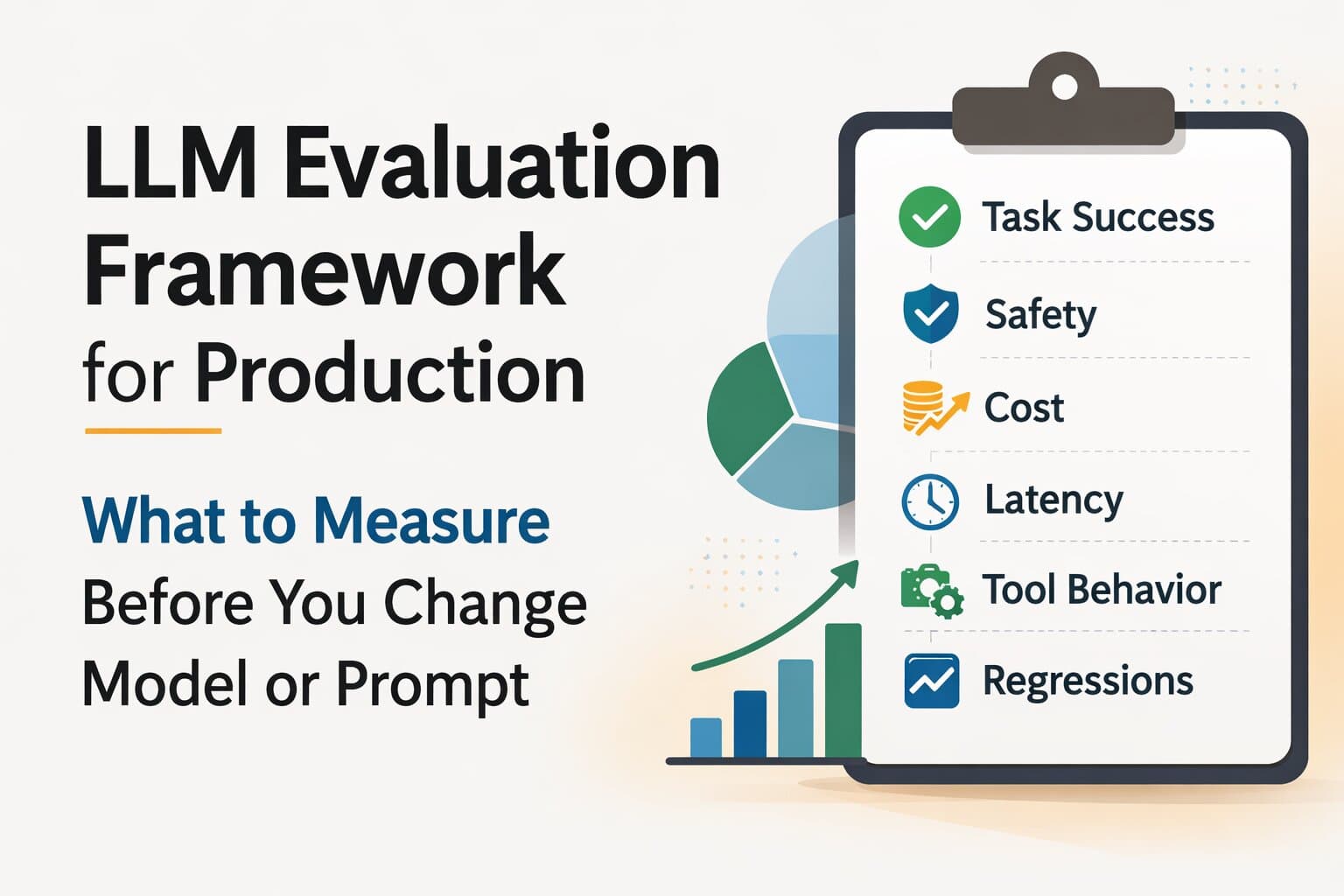
Those are necessary but incomplete. Enterprise readiness also needs outcome quality, groundedness, escalation rate, tool success, and drift indicators by cohort.
20. On-call or support ownership is unclear after rollout
Someone needs to own incident response, release review, and weekly reliability decisions. If ownership is diffuse, reliability gaps become organizational rather than purely technical.
21. Enterprise stakeholders cannot review a minimum evidence pack
Broader rollout usually triggers scrutiny from leadership, security, customer teams, or procurement. If you cannot show scorecards, traces, gate policy, and rollback readiness, the system is not operationally legible enough yet.
Scoring: are you actually rollout-ready?
Score each Partial as 1 point and each Yes as 2 points.
- 0–4: rollout may be reasonable, but keep staged release and tight monitoring
- 5–9: rollout should be narrowed or phased until the highest-impact gaps are closed
- 10–15: you are likely carrying real enterprise reliability risk; add controls before expansion
- 16+: do not broaden rollout yet; run a focused audit or reliability hardening sprint first
Override rule: any single failure in data boundary, release gating, rollback readiness, or end-to-end traceability should be treated as a blocker even if the total score is low.
Minimum rollout packet
Before enterprise rollout, the team should be able to produce a short evidence pack:
- Versioned scorecard: baseline vs candidate on the workflows and cohorts that matter
- Reliability checklist result: marked with owners and due dates for remaining gaps
- Trace examples: good path, bad path, and escalation path
- Release policy: gate thresholds, staged rollout path, rollback steps, named approvers
- Monitoring plan: alerts, review cadence, escalation owner, and first-week watch list
If your team is close to broader rollout but still arguing from anecdotes, start with an AI production audit to baseline the system and expose the highest-risk gaps. If the system is already live and needs weekly release review, drift monitoring, and governance, the Reliability Retainer is the better operating model.
FAQ
Questions readers usually ask next
What changes when an LLM feature moves to enterprise rollout?
The bar shifts from demo success to predictable production behavior. Enterprises care about cohort reliability, rollback, auditability, latency under load, safe escalation paths, and whether the team can explain failures with evidence rather than anecdotes.
How is this checklist different from an eval framework?
An eval framework defines what to measure and how to compare versions. This checklist is narrower and operational: it asks whether the system, release process, and support model are reliable enough for broader rollout now.
What should block rollout immediately?
Critical policy or data-boundary failures, missing regression gates, no rollback path, inability to trace bad answers end-to-end, unstable latency for core workflows, or no clear owner for incidents and post-release monitoring should all block rollout.
When should we use a retainer instead of a one-time audit?
Use a one-time audit when you need a baseline and fix order before rollout. Use a retainer when the system is already live or expanding and you need weekly governance for regression review, drift monitoring, rollout gates, and reliability decision-making.
What teams usually miss
Rollback rehearsal, cohort-level evidence, and explicit ownership after launch. The technical path may exist, but the operational path often does not.
What changes the decision
When the system has real traces, gated releases, and a short evidence pack, rollout decisions stop feeling political and start feeling defensible.
Close to rollout, but not fully confident?
If you need a pre-rollout baseline, our AI audit can map the biggest reliability gaps before exposure expands. If you already need weekly release governance, the Reliability Retainer operationalizes the review loop after launch.
Last updated
March 11, 2026