The core idea
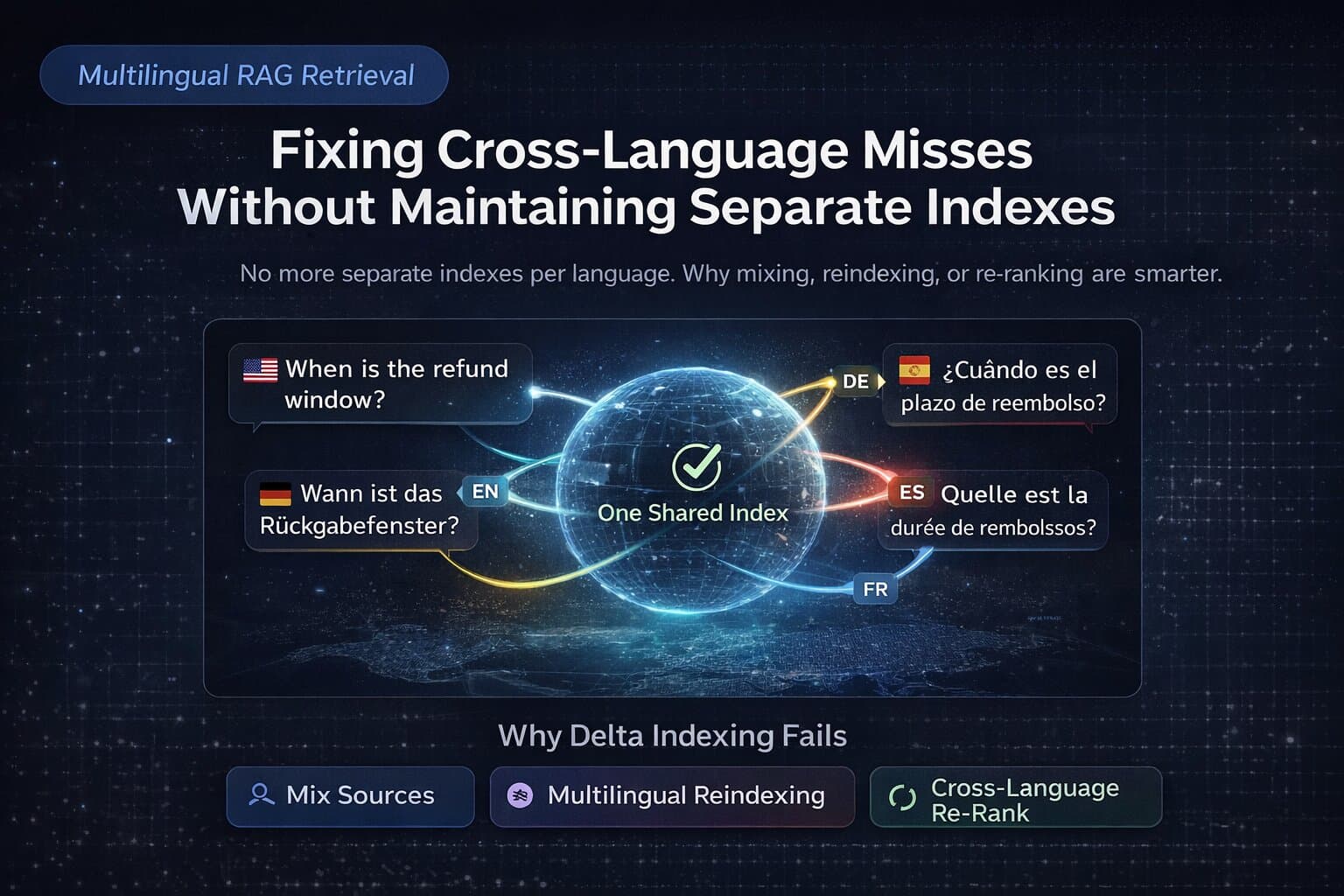
Delta indexing is not only about adding new chunks fast. It is about ensuring obsolete chunks stop influencing retrieval fast enough to protect answer truth.
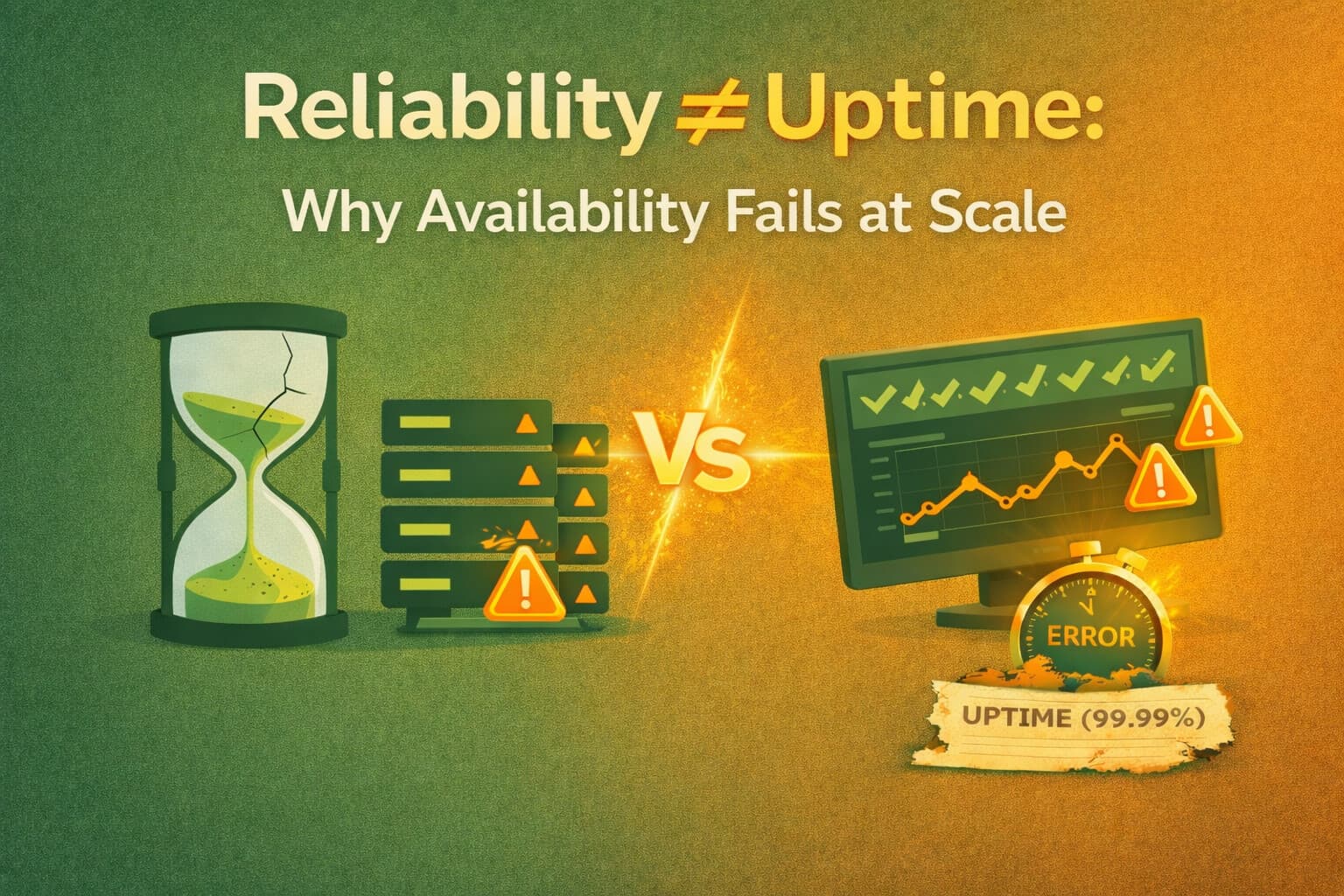
Many teams notice the same pattern: the RAG system looked acceptable yesterday, docs were updated this morning, and now answers are wrong in oddly specific ways. The model did not suddenly become unreliable. More often, freshness broke.
Delta indexing is meant to make content updates efficient. In practice, it often becomes the source of silent retrieval corruption: old chunks remain live, new chunks arrive partially, deletes lag behind, and caches still point to yesterday's evidence.
Context
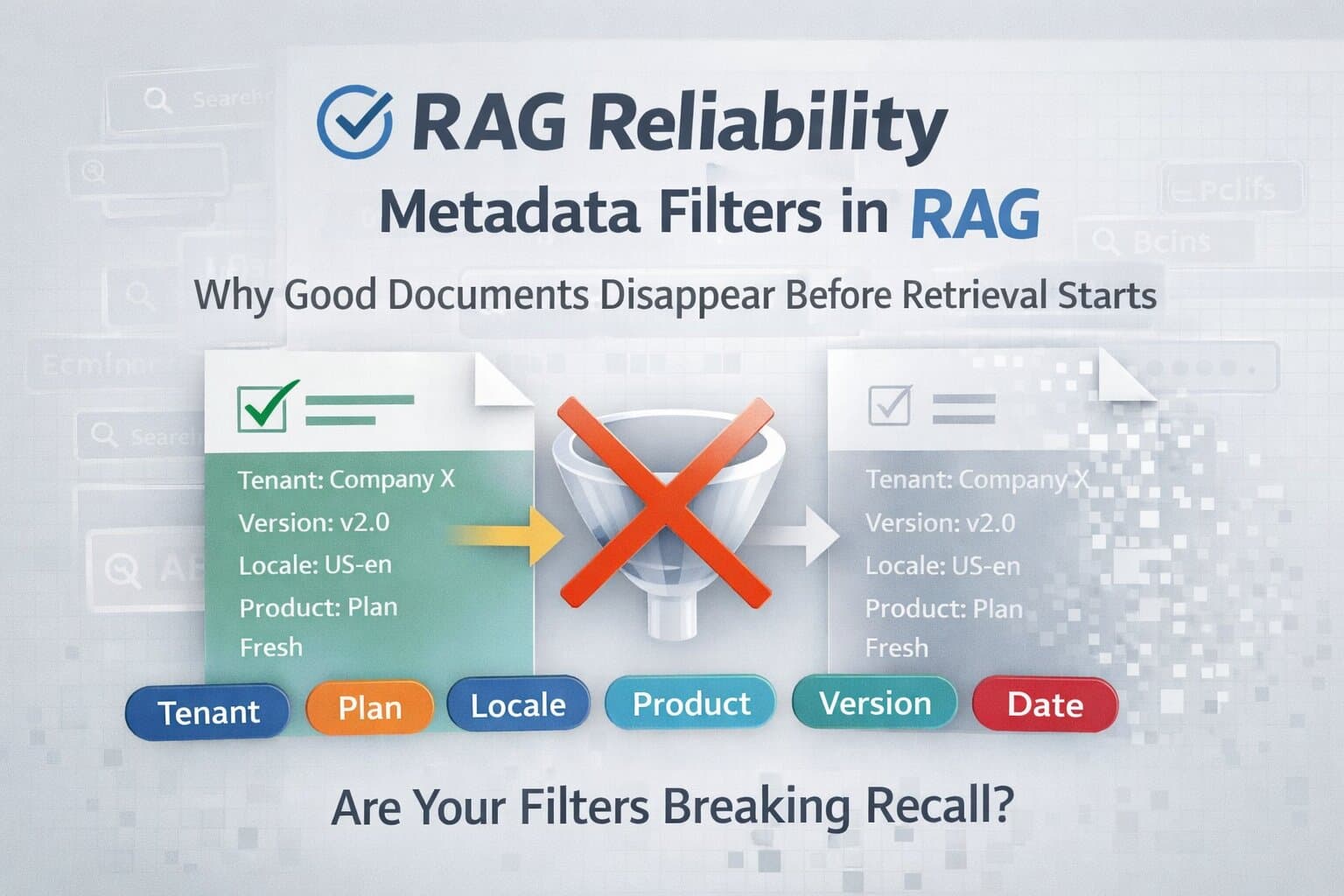
Part of the RAG Reliability hub. Related: Metadata Filters in RAG, RAG Audit Checklist, RAG Optimization Service, and RAG Wrong Answers Triage.
Why content updates break RAG more often than teams expect
Retrieval systems are easiest to trust when the corpus is static. But production knowledge bases are not static. Policies, product docs, pricing, release notes, troubleshooting steps, and support content change constantly.
That means a RAG system is only as current as the weakest link in its freshness pipeline:
- content publishing
- change detection
- parsing and chunking
- embedding and indexing
- delete propagation
- metadata versioning
- cache invalidation
If any of those lag or misfire, the retrieval layer can keep serving old evidence with high confidence.
What delta indexing is supposed to do
Delta indexing exists to avoid rebuilding the whole corpus on every content change. In theory, that is the right tradeoff: detect changed documents, re-parse only the affected content, update the relevant chunks, and remove obsolete ones.
The problem is that delta indexing is harder than appending new documents. It must preserve consistency across revisions. That means:
- new chunks become searchable
- old chunks from the replaced version stop being searchable
- metadata points to the active version only
- retrieval caches and derived stores stop serving old evidence
Many pipelines handle the insert path better than the invalidation path. That is where wrong answers begin.
How stale chunks survive after content updates
Partial document replacement
The system re-embeds only the changed section, but unchanged chunk IDs and surrounding context still point to the old document state. Retrieval can then mix old and new evidence from what looks like one coherent source.
Chunk IDs that do not map cleanly across revisions
If chunk identities are based on positional offsets or unstable headings, a small edit can shift the whole document. Old chunks may survive because the system cannot deterministically match "this new chunk replaces that old chunk."
Deletes and tombstones that never fully propagate
A document is updated or removed in the source system, but deletion events do not reach every retrieval store. The vector index, lexical index, cache, and metadata table may all be on different clocks.
Caches and indexes drifting out of sync
Even when the new chunks exist, retrieval or response caches can continue serving answers built from yesterday's context. Teams often verify the index and forget the cached retrieval path.
The most common freshness failure modes in production RAG
Watch for these patterns:
- new content is indexed, but old content is still retrievable
- the active document version changes, but metadata filters still point to the previous version
- one index updates faster than another, so hybrid retrieval fuses old lexical hits with new vector hits
- section-level updates leave parent-child retrieval pointing to stale parent nodes
- doc deploys complete, but response cache invalidation lags behind
None of these look dramatic in isolation. Together, they create a system that sounds confident while citing a partially obsolete reality.
Symptoms that point to stale chunks instead of bad retrieval
Freshness failures have a recognizable profile:
- wrong answers spike right after content releases or policy updates
- users report that the answer is based on the "old doc" or "previous pricing"
- citations point to the correct source family but quote obsolete language
- different runs return different answers depending on whether old or new chunks win ranking
- generic queries still look fine, but update-sensitive queries degrade immediately
That is usually not an embedding-quality problem. It is a freshness-control problem.
How mixed versions create plausible but wrong answers
Mixed-version retrieval is one of the most dangerous RAG failures because the answer can sound grounded. The model sees real content. It is just reading from two different realities at once.
Typical examples:
- an updated refund rule is retrieved alongside the previous eligibility exception
- a new API parameter default is retrieved with an old code example
- the latest pricing table appears, but a stale footnote or region clause still wins in context
- release notes are updated, but troubleshooting docs still describe the previous behavior
These failures look like hallucination from the outside. In reality, the model is over-combining stale evidence.
How to trace delta indexing failures after a doc release
When wrong answers follow a content update, inspect the release path before you inspect the prompt.
At minimum, trace:
- source document version and publish timestamp
- change-detection event time
- parse time, chunk count, and embedding job completion
- delete or tombstone propagation status for replaced chunks
- index version used by vector, lexical, and metadata filters
- cache invalidation time for retrieval and response layers
- chunk version IDs present in final context
If a final answer cites mixed chunk versions after a release, you have already found the dominant failure layer.
Safer delta indexing patterns
The exact design depends on corpus size and update frequency, but a few patterns are consistently safer.
Step 1: make document version a first-class retrieval field
Every chunk should carry a document-family ID and an explicit source version. Without that, it is hard to detect mixed-version retrieval or to enforce "latest active version wins" logic safely.
Step 2: replace document families atomically where risk is high
For pricing, policy, compliance, and security content, best-effort partial updates are often too risky. It is safer to promote a fully built new version atomically and demote the old version in one controlled step.
Step 3: validate delete and invalidation paths, not just insert paths
Teams usually test whether new chunks appear. They should also test whether old chunks disappear from every searchable path: vector index, lexical index, filters, parent-child references, and caches.
Step 4: add freshness gates after every content release
High-risk content updates should trigger a small freshness validation suite. Ask update-sensitive queries, verify chunk versions in retrieval, and block rollout if stale evidence still surfaces.
What to measure for freshness and delta indexing reliability
Useful freshness metrics include:
- freshness lag: time from content publish to searchable new version
- stale chunk hit rate: how often retrieved context contains obsolete chunk versions
- mixed-version context rate: how often final context contains chunks from conflicting versions of the same document family
- delete propagation lag: time until old chunks stop being retrievable everywhere
- post-release accuracy dip: quality change on update-sensitive eval sets immediately after content updates
These metrics tell you whether the system is actually current, not just eventually consistent in theory.
Fix order when stale chunks are causing wrong answers
When stale chunks are the root cause, the usual fix order is:
- map the full freshness path: source update, change detection, indexing, deletes, and cache invalidation
- add explicit version fields and trace them through retrieval: prove when mixed versions happen
- harden delete and invalidation logic: old evidence must disappear as reliably as new evidence appears
- use atomic replacement for high-risk document families: avoid partial-update ambiguity where trust cost is high
- add post-release freshness evals: validate update-sensitive queries before users discover the problem
Do not start with prompt tuning. If the system still retrieves yesterday's truth, the model is being asked to answer from broken evidence.
Need help proving whether a release broke retrieval freshness?
We trace stale chunks, mixed-version retrieval, and invalidation gaps after content updates through an AI Audit and Optimization Sprint.
FAQ
Questions readers usually ask next
What is delta indexing in RAG?
Delta indexing updates only the changed parts of the corpus instead of rebuilding the whole index every time. In RAG, it usually means inserting new chunks, updating changed chunks, deleting obsolete ones, and keeping metadata and caches consistent after content changes.
Why do stale chunks create wrong answers after docs are updated?
Because retrieval can still surface obsolete chunks that look relevant. If old and new versions coexist in the candidate set or final context, the model may answer with outdated rules, prices, steps, or policy details even though the new content already exists.
How can we tell if wrong answers are caused by stale chunks?
Look for answer regressions immediately after content updates, conflicting citations from the same document family, or traces where old chunks still appear after the new version is published. Freshness mismatch rate and version-level retrieval logs are strong signals.
Should we always rebuild the whole index instead of delta indexing?
Not always. Full rebuilds are often too expensive or too slow. But for high-risk document families like pricing, policy, security, or compliance content, atomic replacement or stronger freshness gates may be safer than best-effort partial updates.
What this article helps you avoid
Treating post-release wrong answers as a prompt or reranking issue when the real problem is stale evidence surviving the update path.
Most expensive blind spot
Verifying that new chunks were added while never checking whether old chunks, parent nodes, and caches were actually invalidated.
Need trace-backed freshness diagnosis?
We baseline stale-chunk hit rates, mixed-version context, and post-release answer drift, then ship the right fix order through an AI Audit and Optimization Sprint.
Last updated
March 22, 2026