The core idea
In multilingual RAG, source language and answer language should not be treated as the same retrieval boundary. Find the best evidence first, then answer in the user's language.
Multilingual RAG usually looks fine until users ask in one language and the best source lives in another. Then the system starts missing obvious answers, and teams assume they need a separate index for every language.
Often they do not. The real problem is usually earlier and cheaper to fix: language filters are too strict, query rewriting erases literals, metadata is incomplete, or reranking prefers same-language but weaker evidence over cross-language truth.
Context
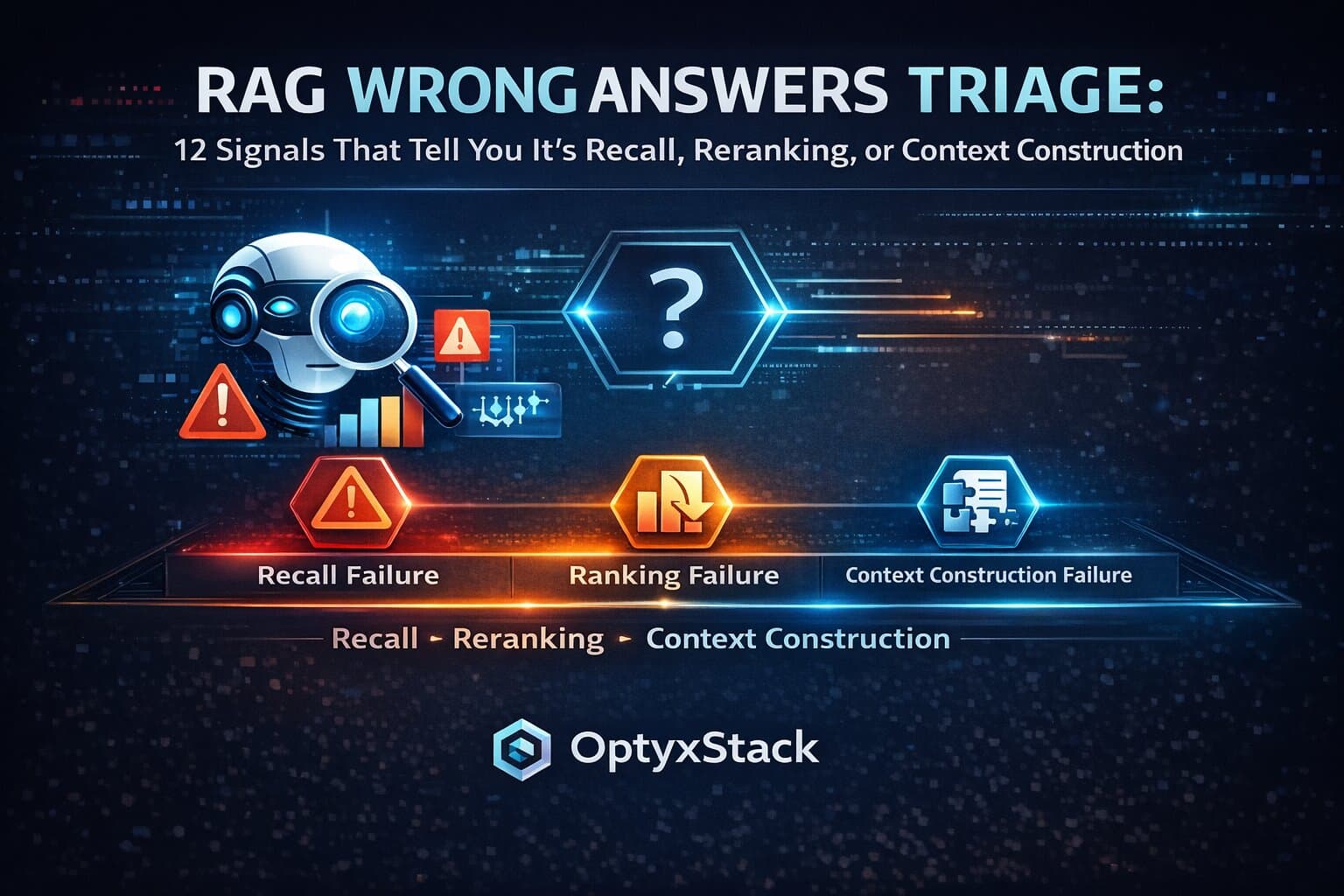
Part of the RAG Reliability hub. Related: Metadata Filters in RAG, Hybrid Search + Reranking, RAG Recall vs Precision, and RAG Wrong Answers Triage.
Why multilingual RAG misses the right document
In multilingual systems, retrieval has two jobs at once:
- find the most relevant evidence
- handle language differences between the query, the source, and the answer the user expects
Those are not the same problem. The best source may be in English while the user asks in Spanish. The source may be in Japanese while the desired answer must be returned in French. If retrieval treats source language and answer language as the same constraint, recall drops quickly.
The common cross-language failure modes
Query and document language mismatch
The query is expressed in one language, but the authoritative content lives in another. If embeddings, lexical retrieval, or fusion are weak across languages, the right source never surfaces.
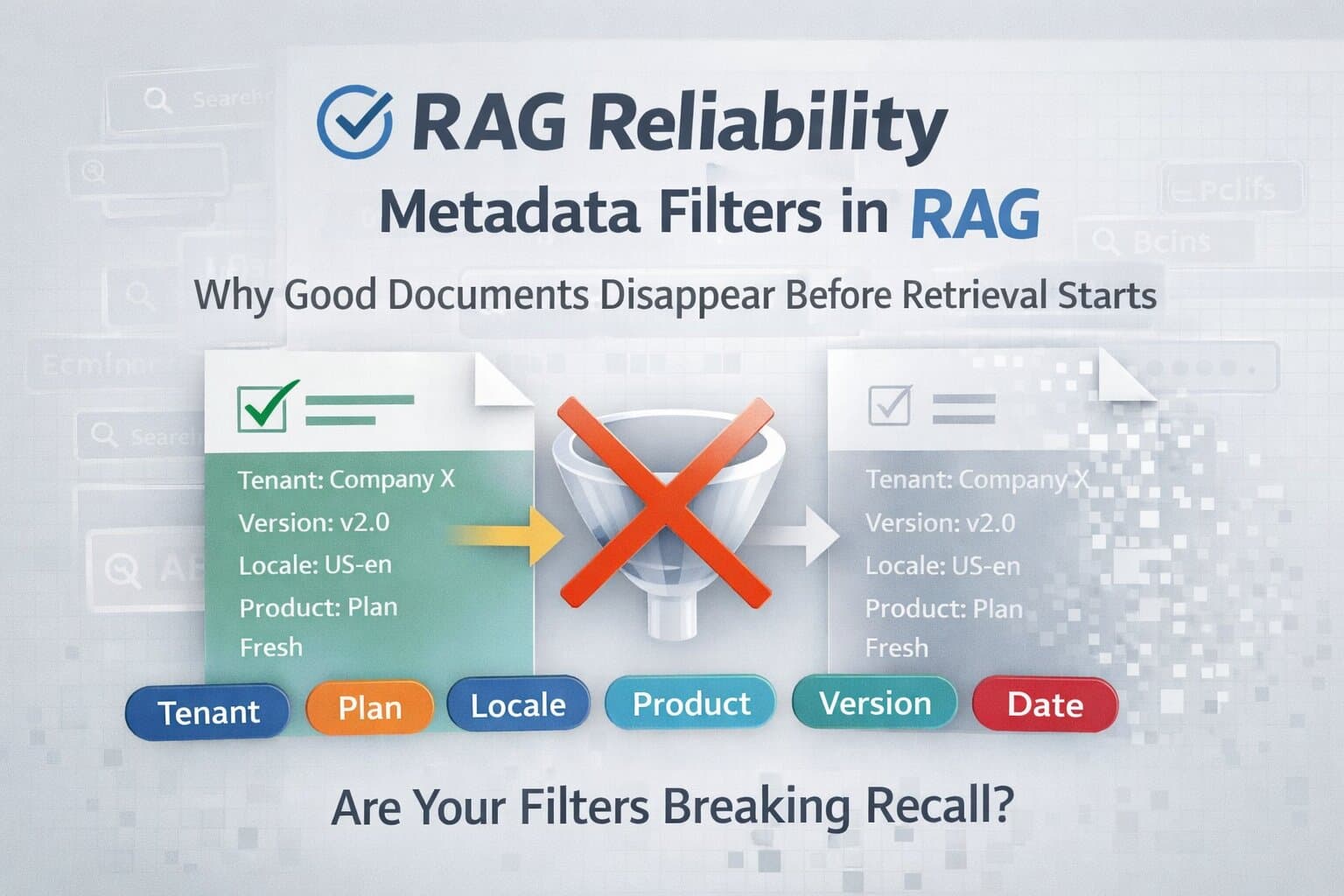
Language filters that are too strict
Teams often filter the corpus to the user's language before retrieval. That sounds clean, but it can exclude the only source that actually contains the answer.
Translation helps intent but erases literals
Translating or rewriting the query can improve semantic alignment while damaging exact tokens that matter: product names, IDs, SKUs, CLI flags, endpoint paths, version strings, or policy clauses.
Mixed-language corpora with weak metadata
If documents are missing language tags, or if bilingual pages, translated mirrors, and region-specific variants share inconsistent metadata, retrieval cannot reason clearly about which source is authoritative.
Why separate indexes are often the wrong first fix
Separate indexes can seem attractive because they simplify search boundaries. But they often create new problems:
- duplicated ingestion and indexing pipelines
- version drift across languages
- harder cross-language fallback when one language lacks coverage
- more operational overhead for sync, evals, and freshness validation
If the real issue is filter design or rewrite behavior, separate indexes simply harden the wrong boundary.
Symptoms that point to cross-language retrieval failure
Cross-language failures usually have a recognizable pattern:
- same-language queries work, but translated versions of the same question fail
- the answer exists in the corpus, but only in another language
- retrieval quality drops sharply for locales with thinner documentation coverage
- the system prefers a lower-quality same-language article over a better cross-language source
- answer quality changes dramatically after adding language filters or translation middleware
That is not just "multilingual complexity." It is a diagnosable retrieval boundary problem.
How to diagnose multilingual misses in traces
To debug multilingual retrieval, log more than the final answer:
- query language and any detected alternative language hypotheses
- whether the query was translated, rewritten, or normalized before retrieval
- exact literals preserved or lost during rewrite
- language metadata on retrieved candidates
- whether strict language filters were applied before candidate generation
- which language the final answer was requested in versus which language the evidence came from
If the correct source appears only when filters are relaxed or when literal-heavy rewrite is disabled, you have already narrowed the failure layer.
Safer patterns for one shared multilingual index
One shared index can work well if retrieval and ranking are designed to separate evidence quality from language preference.
Step 1: keep language metadata explicit but not over-controlling
Track document language, translation status, source authority, and region. But do not automatically use language as a hard exclusion unless policy or permission requires it.
Step 2: retrieve broadly, then rerank with language-aware signals
Let candidate generation search broadly enough to find cross-language matches. Then rerank with signals like source authority, language match preference, translation quality, and literal overlap so the final context stays relevant and interpretable.
Step 3: preserve exact literals across translation and rewrite
Product terms, IDs, endpoints, error codes, and quoted phrases should usually be preserved through translation and query normalization. Semantic intent can change languages. Exact literals often cannot.
Step 4: validate answer language separately from source language
Retrieval should optimize for the best evidence. Generation should optimize for the user's language preference. Those are related but separate controls. A strong system can retrieve English evidence and answer correctly in Portuguese if the evidence binding stays intact.
What to measure for multilingual retrieval quality
Useful multilingual metrics include:
- cross-language hit rate: how often the answer-bearing source is in a different language than the query
- source-language recall: whether retrieval found the authoritative evidence regardless of answer language
- literal preservation rate: whether exact tokens survived translation or rewrite
- filter suppression rate by language: how often strict language filters removed the right source
- answer accuracy by query language: segmented by locale and documentation coverage depth
Those metrics make it possible to distinguish weak multilingual retrieval from weak multilingual generation.
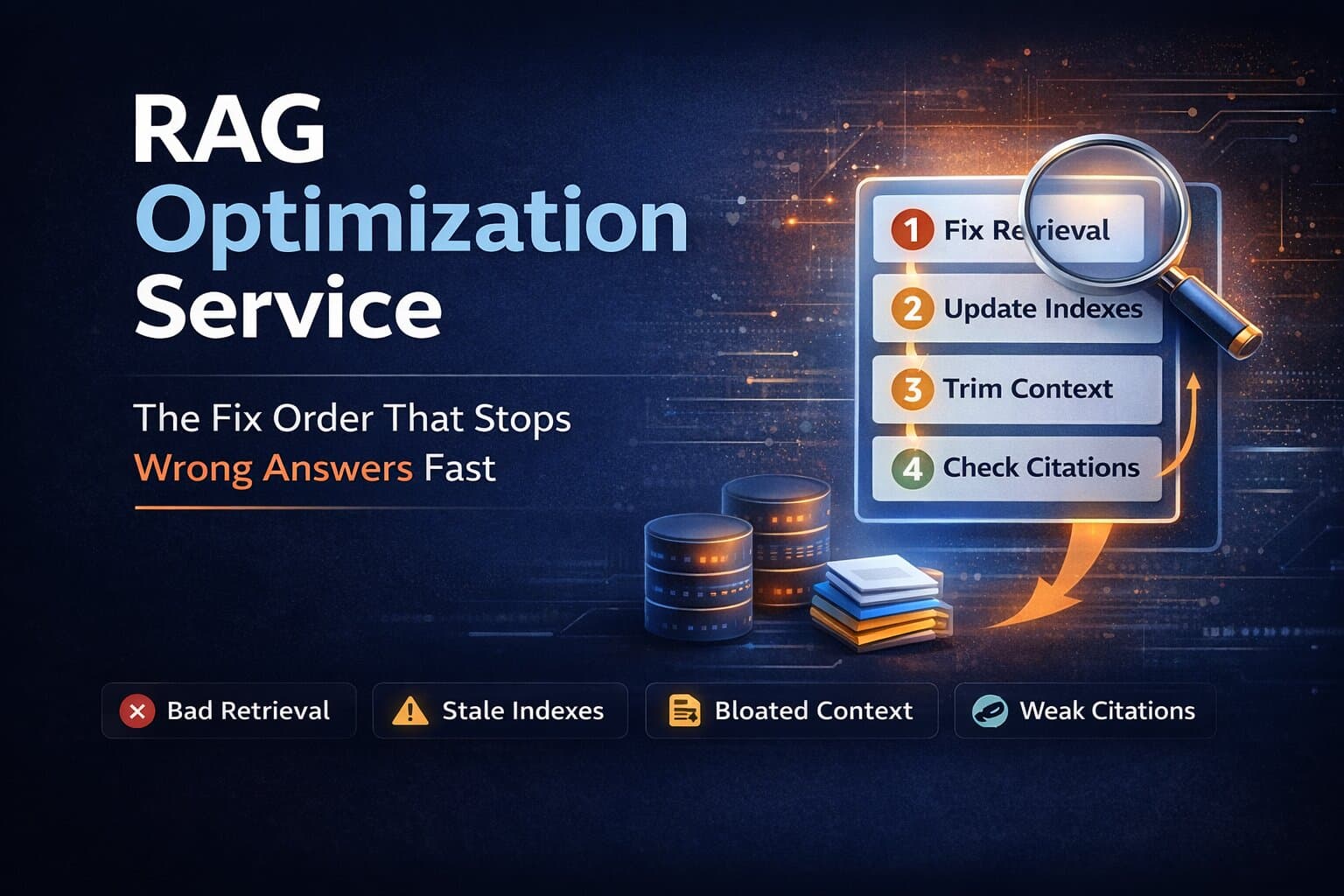
Fix order when multilingual retrieval is missing the truth
When cross-language misses are the problem, the usual fix order is:
- prove whether the answer-bearing source exists in another language: establish the real failure layer first
- audit language filters and rewrite logic: remove silent exclusions before changing models
- preserve literals and test hybrid retrieval: exact-match rescue often matters in multilingual corpora
- rerank with language-aware preferences: prefer same-language evidence when comparable, but do not suppress stronger cross-language truth
- evaluate source recall and answer language separately: do not collapse both problems into one vague multilingual score
Prompting alone is rarely the first fix. If the right source never reaches the model because it was in another language, the system is failing in retrieval policy, not generation style.
Need help proving whether multilingual answers fail in retrieval or generation?
We baseline cross-language recall, filter suppression, rewrite loss, and answer quality through an AI Audit and Optimization Sprint.
FAQ
Questions readers usually ask next
Why does multilingual RAG fail even when the answer exists?
Because the answer may live in a document written in another language, while the query, filters, or rewrite pipeline constrain retrieval to the user's language only. The system then searches the wrong subset of the corpus and misses the best evidence.
Do we need separate indexes for each language?
Not always. Separate indexes increase operational cost, duplication, and version drift risk. Many teams can keep one shared index and improve cross-language recall through better language metadata, hybrid retrieval, careful rewrite logic, and reranking that respects both semantic relevance and language preference.
Should we translate every query before retrieval?
Sometimes translation helps, but it is not a universal fix. Translation can preserve intent while losing exact literals such as product names, error codes, feature flags, or legal terms. That is why translation should be controlled and validated, not assumed to be lossless.
What should we measure in multilingual RAG?
Measure source-language recall, cross-language hit rate, answer correctness by query language, literal preservation after rewrite or translation, and whether strict language filters suppressed the answer-bearing source.
What this article helps you avoid
Splitting the whole corpus into separate language indexes before proving that the real problem is not just filters, rewrite loss, or language-blind ranking.
Most common blind spot
Measuring answer quality by locale without checking whether the authoritative evidence was excluded simply because it lived in another language.
Need trace-backed multilingual retrieval diagnosis?
We baseline cross-language misses, language-filter suppression, and multilingual answer quality, then ship the right fix order through an AI Audit and Optimization Sprint.
Last updated
March 22, 2026