The core idea
Metadata filters are part of retrieval. If they exclude the right document before search starts, every downstream metric can look reasonable while the system is still wrong.
A surprising number of RAG failures happen before retrieval actually starts. The system never had a chance to find the right document because metadata filters quietly removed it from the candidate pool first.
This is one of the easiest failure modes to miss. Teams inspect embeddings, top-k results, rerankers, and prompts while the real issue sits one layer earlier: product version, locale, plan, freshness, or tenant scope was applied too aggressively or incorrectly.
Context
Part of the RAG Reliability hub. Related: RAG Audit Checklist, RAG Recall vs Precision, Hybrid Search + Reranking, and RAG Wrong Answers Triage.
Why metadata filters fail earlier than retrieval metrics can see
Most retrieval dashboards begin after candidate generation. They show what the retriever returned from the set of documents it was allowed to search.
That means a filter failure can hide in plain sight. If the correct source was excluded before retrieval, dashboards may show:
- reasonable-looking retrieval scores on the wrong subset of documents
- stable reranker behavior on candidates that never included the right source
- wrong answers that look like recall or grounding issues downstream
This is why metadata filter bugs often survive much longer than obvious search bugs. The system looks coherent inside the wrong search boundary.
The common filter dimensions that break RAG silently
Tenant and access scope
These are necessary hard boundaries. But if identity mapping, team scope, or document ACL metadata drift, the system may exclude documents the user should legitimately see.
Version and product line
Product docs often overlap across versions, editions, or deployment modes. If version tags are stale or query routing assumes the wrong default version, the system can filter out the correct document family before search starts.
Locale, region, and plan tier
These dimensions are dangerous because they are partly semantic and partly policy-driven. A strict region or plan filter may remove the only source that contains a useful general answer, while a loose filter may surface the wrong policy for the user cohort.
Freshness and publication state
Newly published or recently updated docs often fail here. If the ingestion pipeline and the filterable metadata disagree on publication state, visibility date, or version status, the best document can disappear even though it is already in storage.
How good documents disappear before retrieval starts
The most common pattern is not a dramatic bug. It is quiet mismatch:
- the query is tagged as v2 when the answer only exists in v2.4 docs
- the user is routed to US documents while the product behavior is actually governed by global or EU policy
- the system requires published=true but the source uses active or approved instead
- the request inherits a default plan=enterprise or plan=free that excludes the actual support article needed
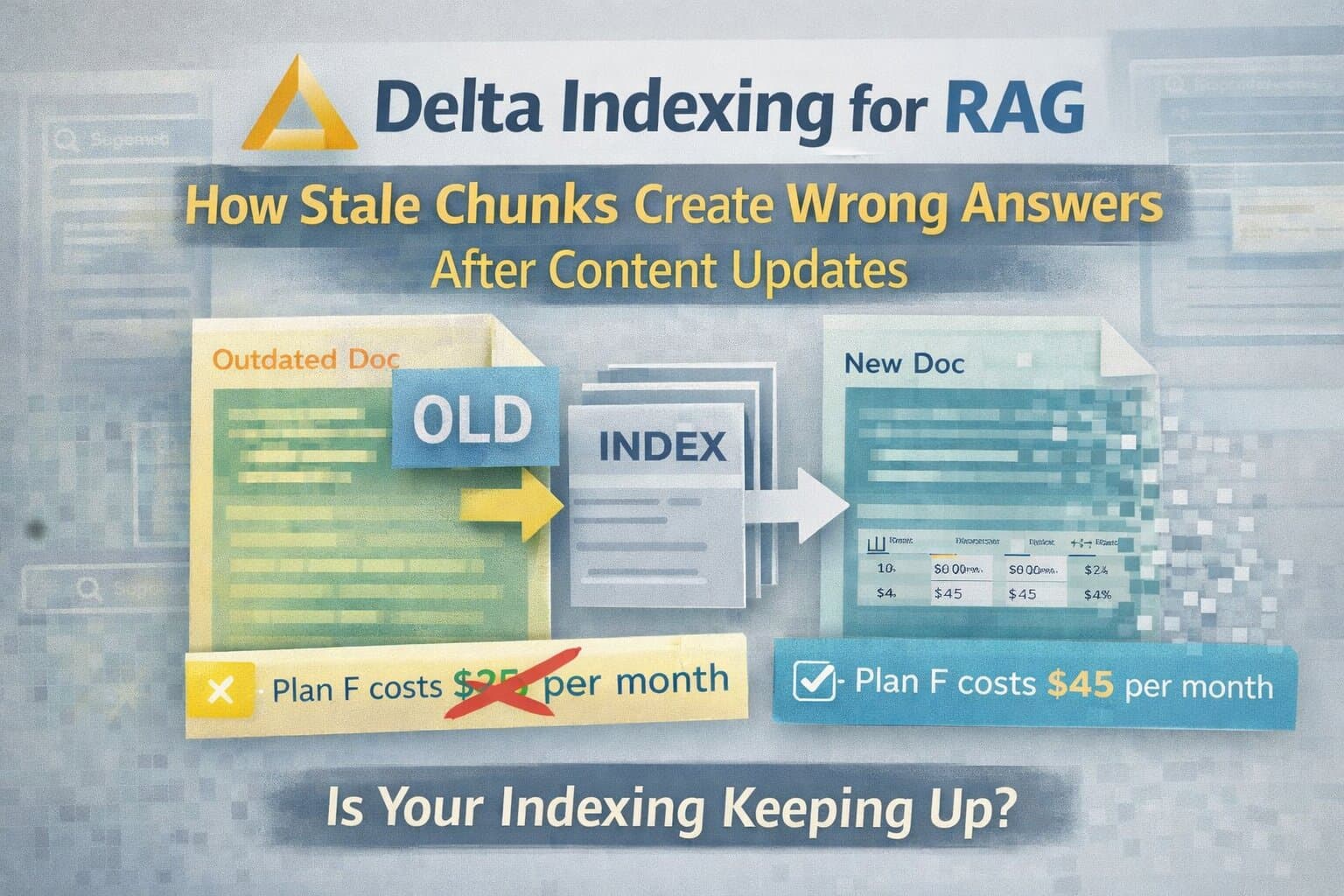
- freshness filters hide the updated document because timestamps or document state were not normalized consistently
Once the boundary is wrong, every downstream layer is operating on a biased corpus slice.
Symptoms that point to filter problems, not embedding problems
Metadata-filter failures often have a distinctive shape:
- removing one filter suddenly makes the correct document appear
- errors cluster around one version, locale, product tier, or release cohort
- retrieval quality looks fine for generic queries but fails on cohort-specific questions
- users report "the answer exists in the docs" and they are right, but the trace never shows that doc in candidates
- the system consistently cites older or more generic material because the precise cohort-specific source was filtered out
Those are not classic embedding symptoms. They are boundary symptoms.
The most common filter design mistakes
Common mistakes include:
- Using hard filters where soft preference is safer: version or locale are sometimes better used as ranking boosts with fallback, not absolute exclusion
- Relying on hidden defaults: the request inherits product, tier, or locale assumptions without explicit evidence from the user or session
- Assuming metadata is clean: docs are missing tags, carry legacy tag formats, or use inconsistent enums across systems
- Collapsing filter logic into query code: no central explanation of why a document was excluded
- Treating freshness as binary: the newest eligible document may not actually be the best one, and stale-state transitions are often delayed
The most expensive result is silent under-retrieval. The system looks disciplined because it searched a smaller candidate set, but it searched the wrong one.
How to debug metadata filters in production traces
Filter bugs are hard to fix if you only log final answers or top-k results. You need to see the pre-retrieval boundary decision.
At minimum, log:
- resolved filter values for tenant, version, locale, plan, region, freshness, and publication state
- where each filter value came from: user input, session context, product defaults, or backend rule
- candidate corpus size before and after filters
- which documents would have matched without one specific filter
- empty-candidate or low-candidate events after filtering
- whether fallback logic ran when the filtered pool was too small
Without that, the team keeps debating search quality when the real issue is eligibility logic.
Safer filter patterns for production RAG
The right pattern depends on risk, but a few defaults are consistently safer.
Step 1: separate hard filters from ranking preferences
Access control, tenant isolation, and truly forbidden scopes belong in hard filters. Other dimensions, like product version or locale, may need nuanced treatment. Sometimes they should narrow aggressively. Sometimes they should bias ranking first and relax only when coverage is weak.
Step 2: validate filter coverage before query-time retrieval
Before running semantic search, validate that the filtered slice still contains enough plausible material. If a filter combination reduces coverage to near-zero, either fail explicitly or invoke controlled fallback logic rather than silently searching a bad subset.
Step 3: make version and freshness explicit
Version and freshness logic should be inspectable. Do not bury them inside undocumented helper functions or ad hoc query builders. Teams need to know why one document family was in or out.
Step 4: log the filter decision, not just retrieval results
The filter decision is part of retrieval. If you cannot explain why a document was excluded, you do not have a reliable retrieval system yet.
What to measure for filter reliability
Useful filter-specific metrics include:
- filter suppression rate: how often the answer-bearing document exists in the corpus but not in the filtered corpus
- empty filtered candidate rate: how often filters leave retrieval with zero or near-zero eligible docs
- fallback rate: how often the system must relax preferences or widen scope
- cohort accuracy by filter dimension: version, locale, plan, region, tenant
- freshness mismatch rate: how often an older doc wins because the newer one was ineligible
These metrics make it possible to tell the difference between bad search and bad boundaries.
Fix order when metadata filters are suppressing the right documents
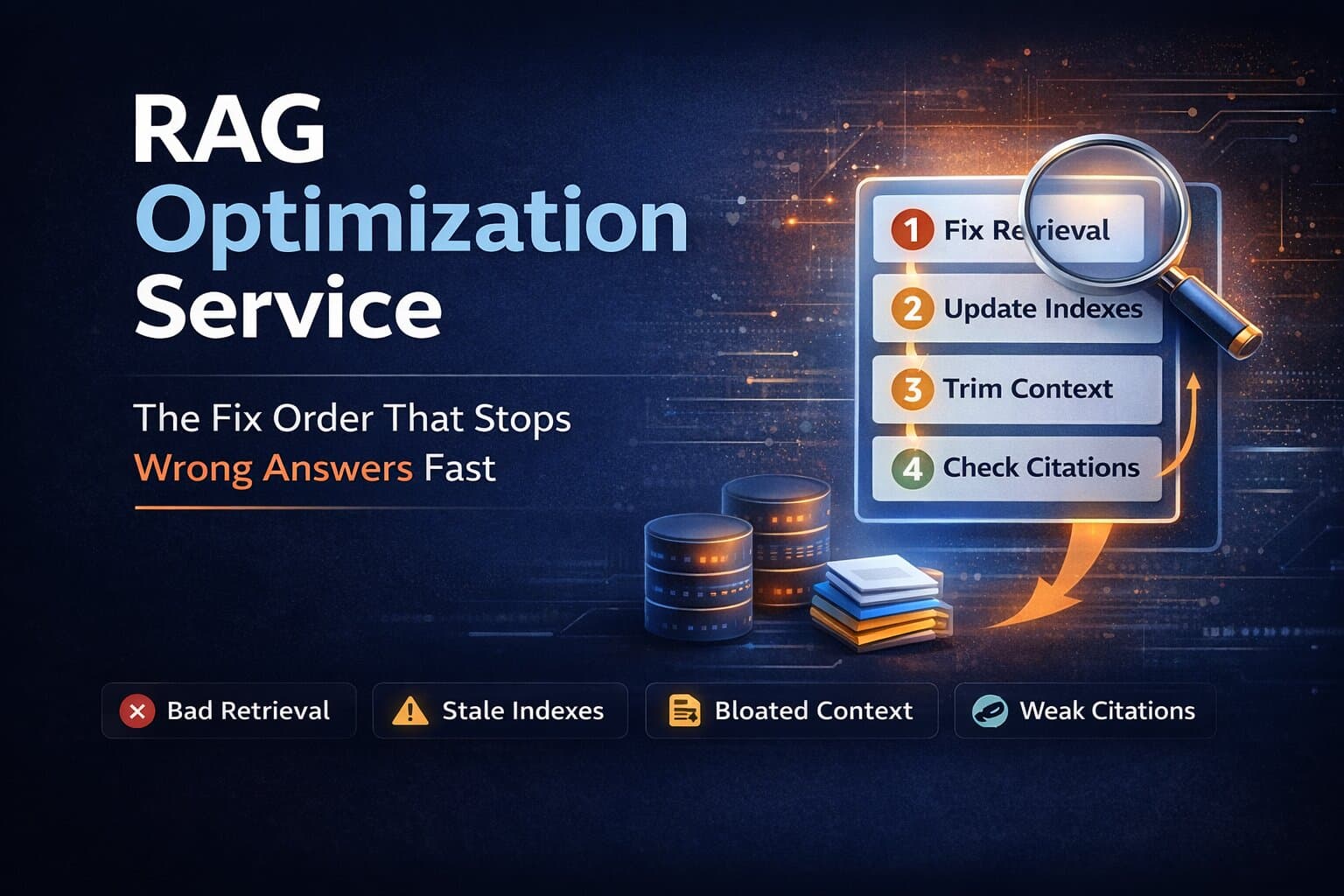
When metadata filters are the root cause, the usual fix order is:
- map all filter sources: explicit input, inferred context, defaults, and backend rules
- audit metadata quality: missing tags, inconsistent enums, stale version and freshness fields
- separate strict boundaries from ranking preferences: do not use hard exclusion where soft bias is safer
- add filter coverage checks and controlled fallback logic: do not search silently inside an empty or broken slice
- measure suppression before touching prompts: prove that the right document can survive into the candidate pool first
Prompt changes are downstream cosmetics if eligibility logic is wrong. First make the right documents searchable. Then worry about generation quality.
Need help proving whether your retrieval is weak or your filters are excluding the truth?
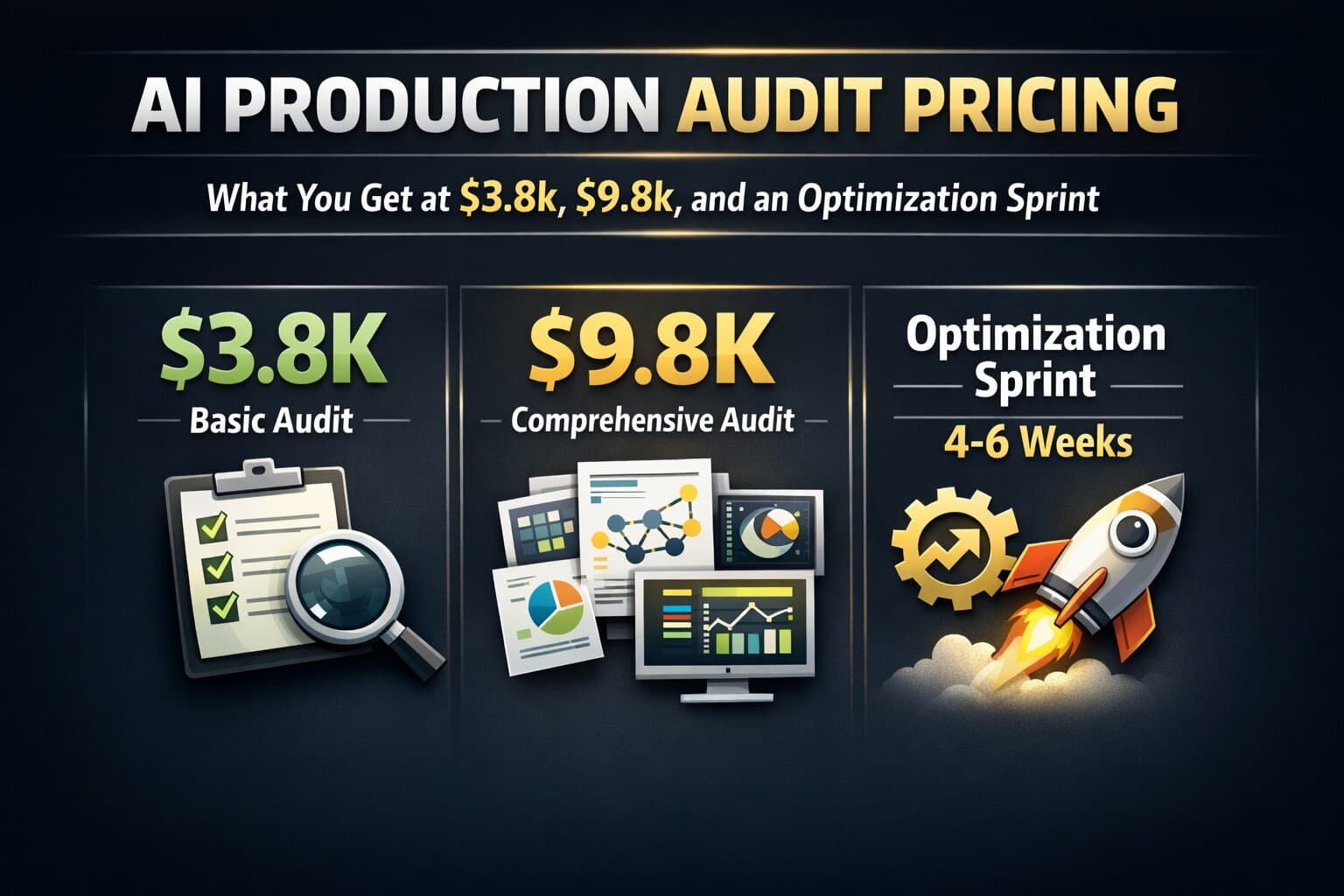
We trace pre-retrieval boundaries, candidate suppression, and cohort-specific wrong answers through an AI Audit and Optimization Sprint.
FAQ
Questions readers usually ask next
What are metadata filters in RAG?
Metadata filters restrict which documents are even eligible for retrieval. They are usually based on attributes like tenant, access scope, locale, product, version, plan, region, freshness, or publication state. They run before ranking and can silently remove the right source.
Why do metadata filters cause wrong answers in RAG?
Because the system can exclude the correct document before vector search, lexical search, or reranking ever start. The final answer then comes from an incomplete candidate pool, which often looks like weak retrieval or hallucination even though the real problem is filtering.
How do we know if filters are too strict?
Look for queries where the answer exists in the corpus but not in the filtered candidate pool, especially when removing one filter suddenly surfaces the right source. Filter hit rates, empty candidate rates, and per-filter drop-off traces help prove this quickly.
Should version or locale be a hard filter or a ranking feature?
It depends on the risk. Access scope and strict permission boundaries should be hard filters. Version, locale, and plan often need a more nuanced design: sometimes a hard filter, sometimes a preferred ranking signal with fallback logic if coverage is weak.
What this article helps you avoid
Tuning embeddings, rerankers, or prompts when the real issue is silent document suppression by version, locale, plan, or freshness filters.
Most common blind spot
Measuring top-k quality only after filters run, which hides the fact that the answer-bearing source was never eligible for search.
Need trace-backed filter diagnosis?
We baseline candidate suppression, cohort-specific recall, and filter fallback behavior, then ship the right fix order through an AI Audit and Optimization Sprint.
Last updated
March 22, 2026